 DR BLADES
Trip to Sakai
In the summer of 2026 I was finally back in Japan for work. This time I had kept one day free, for Sakai, the old city of sword and knife smiths south of Osaka.
Early in the morning
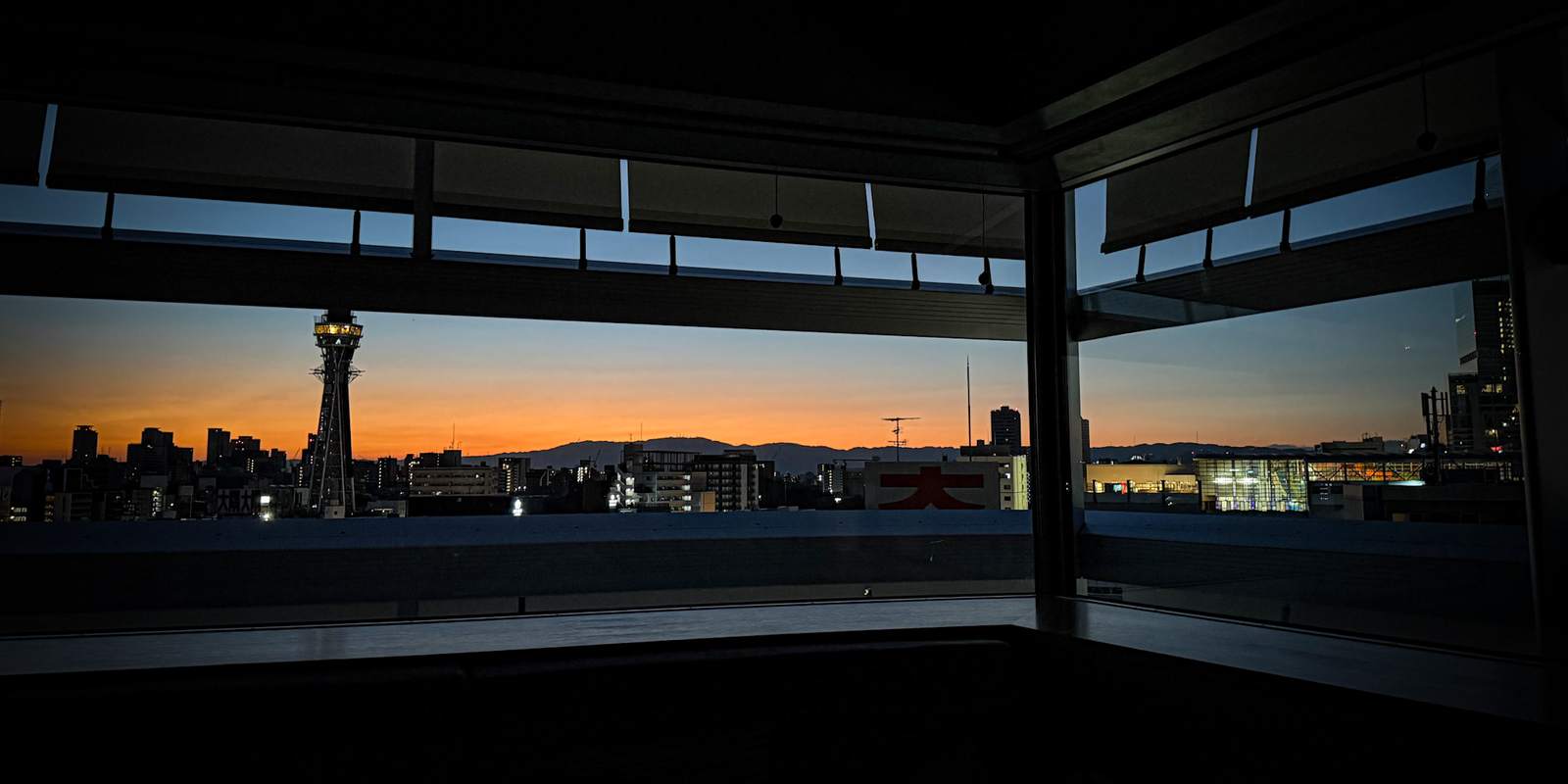
I got up extra early that day, and it started with a spectacular sunrise. The local train gets you to Sakai in no time.
At the knife museum
The best place to start is the Sakai Traditional Crafts Museum with its Knife Shop. It gives you a great overview of Sakai's history and of how the classic knives are made. The exhibition also shows how the work is divided: the smith forges, the sharpener grinds, others make the handles. The individual masters are introduced, and a map of the city shows where their workshops are.
Exploring
With the map in my head I set off exploring, because I had a plan. I really wanted to bring home some of this special Japanese steel.
From the outside the forges often look unremarkable. They look almost like garages and are part of the houses where the smiths live with their families.
I got a piece of Aogami from a smith whose name, unfortunately, I didn't quite catch. He was fairly young, maybe 35, and showed me around his whole forge, obviously a one-man operation. One day he forges, another day he straightens the blades.
At Tadashi Enami's
I stood in front of Tadashi Enami's workshop with a sheet of paper in my hand. On it, thanks to my colleague from the university in Osaka, I had written in Japanese who I am: a hobby smith from Germany who deeply admires Japanese bladesmithing and the San Mai technique, and who collects steel on his travels that later becomes knives. Along with that, the request whether he might let me have a small piece of Shirogami or Aogami, gladly for payment too, as a memory of Japan to go into my next knives. Below the text, photos showed some of my early work.
Tadashi Enami read it, looked at the photos and nodded. Then he put a bar of Aogami into the coals, waited until it glowed bright, and cut off a piece on the anvil with a hot cut: no cutoff grinder, no saw, just heat, chisel and hammer. Then the same with the Shirogami.
A boy was busy in the forge, surely not even fourteen yet. I asked the master whether he was his son. He laughed: it was the apprentice. The boy also labeled my steels with 白 and 青 and wrapped them in newspaper.
I was completely overwhelmed by his generosity. Tadashi Enami wouldn't take any money for the steel. What impressed me most: he interrupted his work to spend time with me. What a gesture. Thinking about it still moves me today.
To the tackle shop to clear my head
I was honestly all shaken up at having been allowed to see and experience all of this. I may get a bit sentimental in moments like that … anyway, I badly needed something to clear my head. I kept walking through the city and suddenly found myself in front of a tackle shop full of the craziest fishing lures. My other deep passion :-) Japan has a market for high-quality used fishing gear, and I found more than I was looking for and ended up a few thousand yen poorer once again!
What became of it
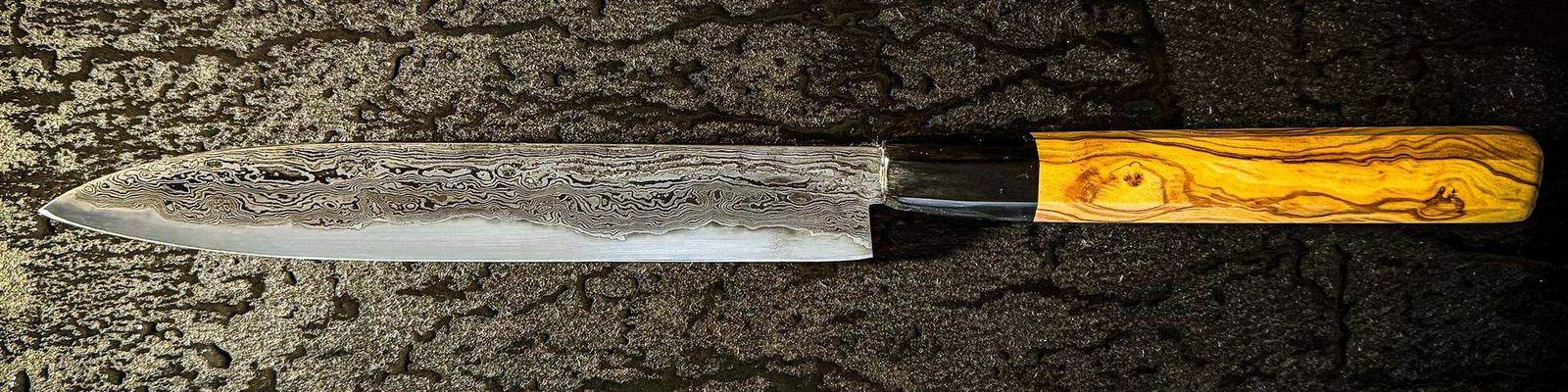
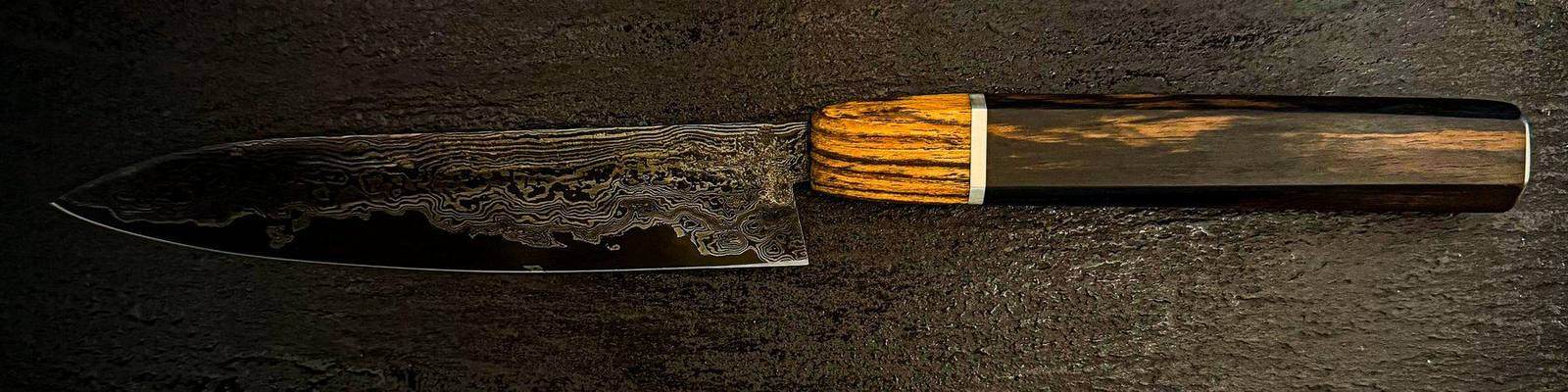
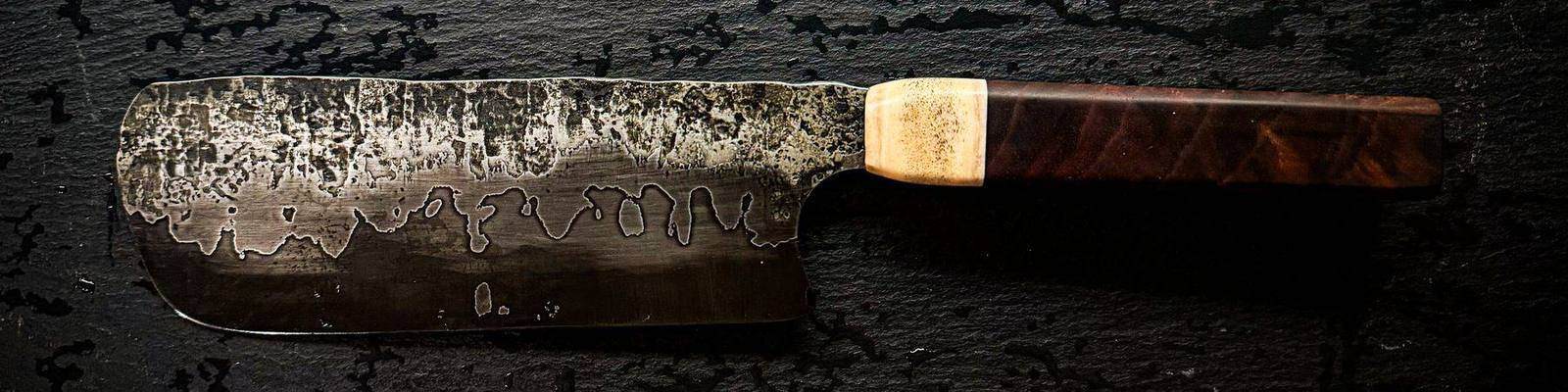
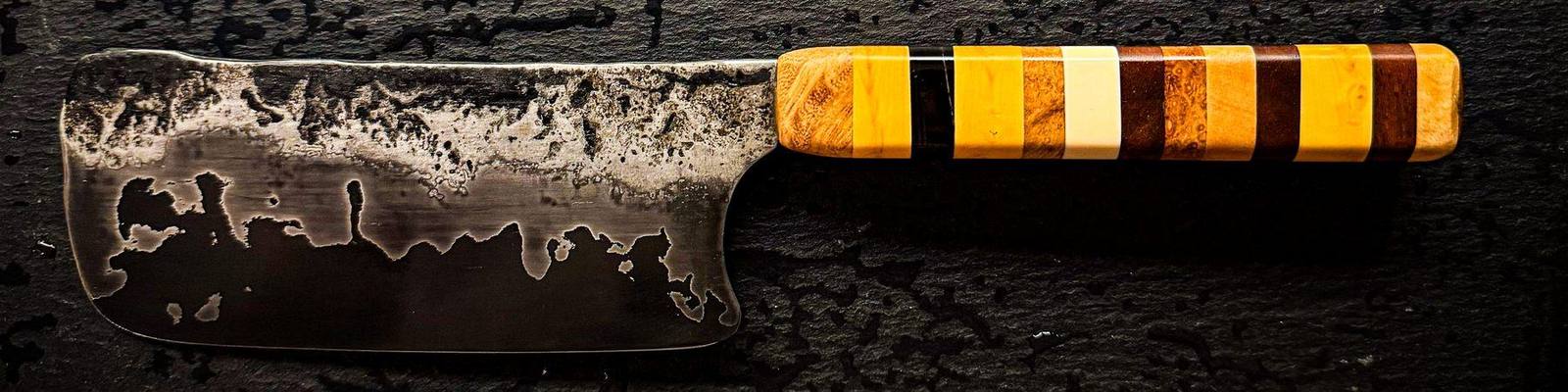
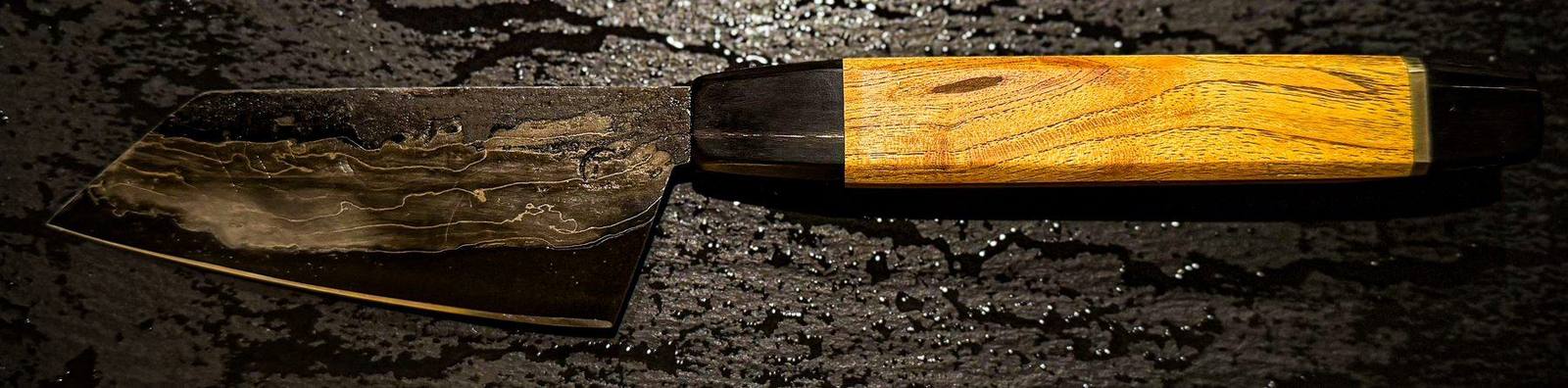
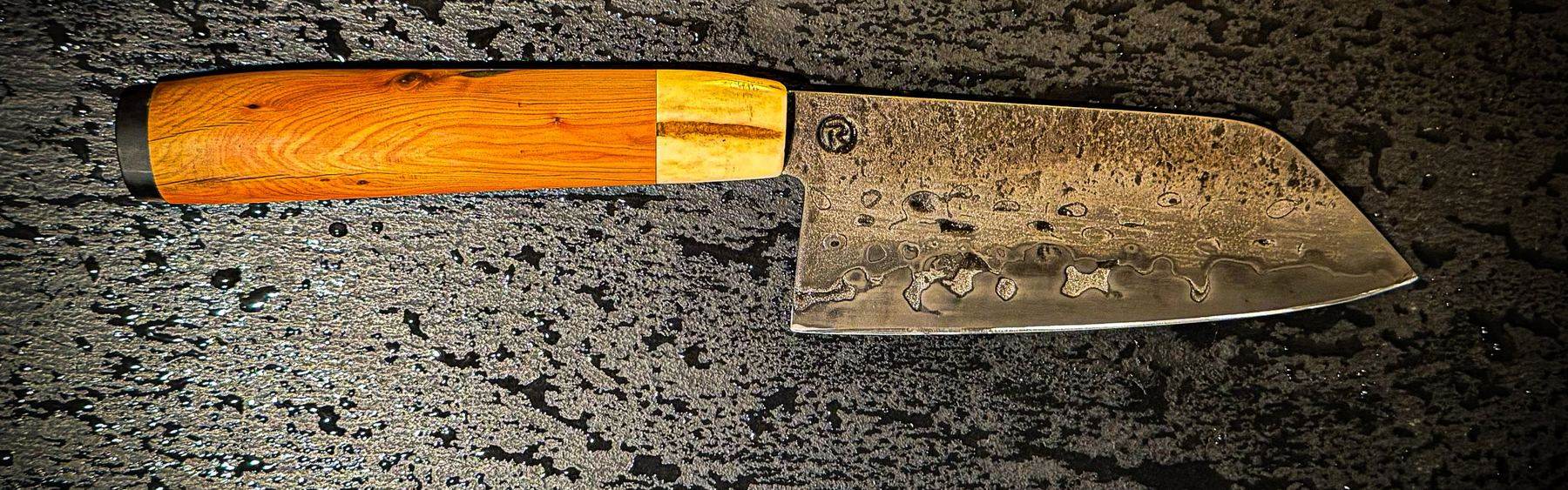
Back home, the steel from Sakai turned into quite a few things. From Tadashi Enami's Aogami and Roland's Damascus I forged two knives in the same fire, Unkai and Konami. His Shirogami and Aogami also went into Shirowa and Aowa, two Nakiri with side layers made from the iron of an old wagon wheel. Wadachi, with its Aogami edge, comes from the same wheel, and Hoshikuzu has a cutting core of Shirogami.