DR BLADESDR Blades No. 9

Unkai

Above the edge lie the clouds.
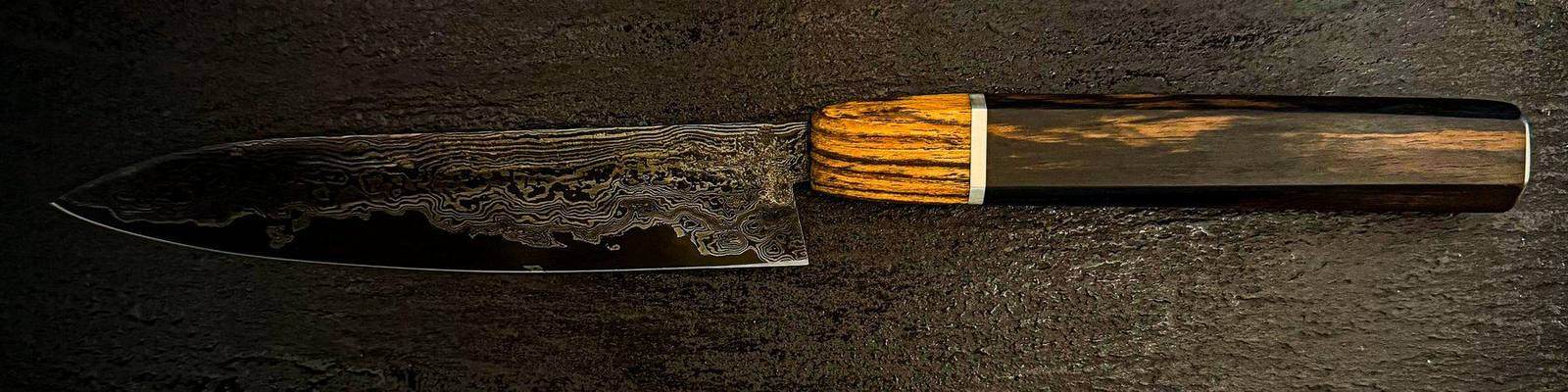
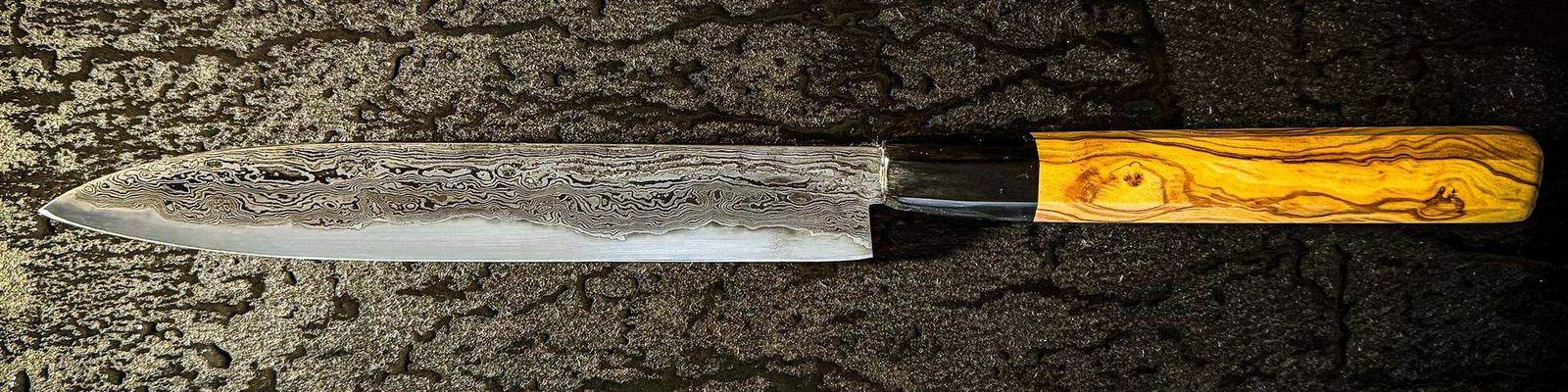
Unkai – full knife
Steel from Sakai, layers from Saarland.
Above, the clouds drift by,
below, the edge lies clear.

Unkai (雲海) is Japanese for “sea of clouds”: the view from a mountain down onto the cloud cover below. Above, the dark and light layers of the Damascus drift along; below lies the clear band of the edge.

At a glance

Details

The story

In the summer of 2026 I was in Japan, among other places in Sakai, the old city of sword and knife smiths. I stood in front of the workshop of Tadashi Enami, a well-known master smith, holding a letter I had written in Japanese: who I am, that I admire Japanese smithing, and whether he might let me have a small piece of Shirogami or Aogami as a memento of this trip.

He read it, looked at the photos of my knives and nodded. Then he heated a bar of Aogami in the coals and cut off a piece on the anvil: no cut-off wheel, no saw, just heat, chisel and hammer. Then the same with the Shirogami. To me it is more than steel; it is a keepsake of this trip.

That Aogami became Unkai’s cutting core. I forged the knife using the Warikomi technique: the Damascus is split open, the hard Aogami core is laid into the split, and the two are forge-welded together in the fire.

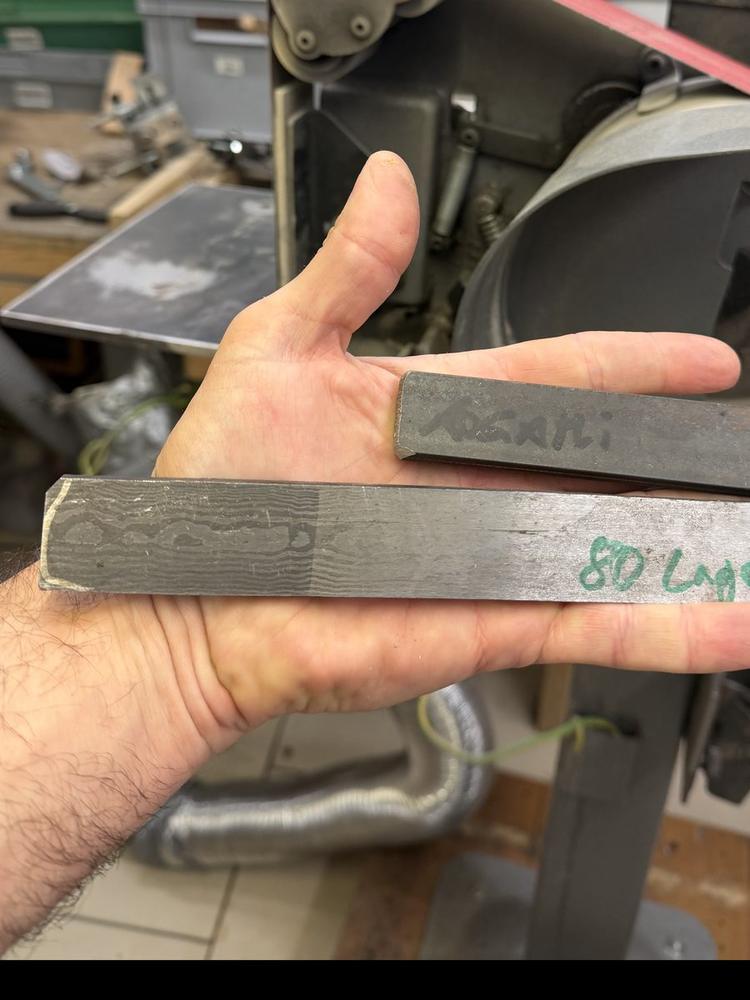
The Damascus comes from Roland, the smith from Saarland, who has given us a lot of material and even more inspiration. His 80 layers lie over the blade like a sea of clouds, and beneath them runs the clear, bright Aogami edge. Japan and Saarland, united in one blade. A funny thought.

Unkai is a gift for Thomas, a good friend and a gifted home cook. He is right-handed, so I gave the left side of the blade a slight hollow grind. The slight curve helps food release from the blade more easily.

Handle and Saya are made from the same piece of olive wood. That way knife and sheath belong together, and the grain carries on from one to the other. The Saya is held by a small beech pin, an offcut from the workshop.
From material to blade

  1. The material
    01

    The material

    Aogami from Sakai and an 80-layer Damascus from Roland.

  2. The line for splitting
    02

    The line for splitting

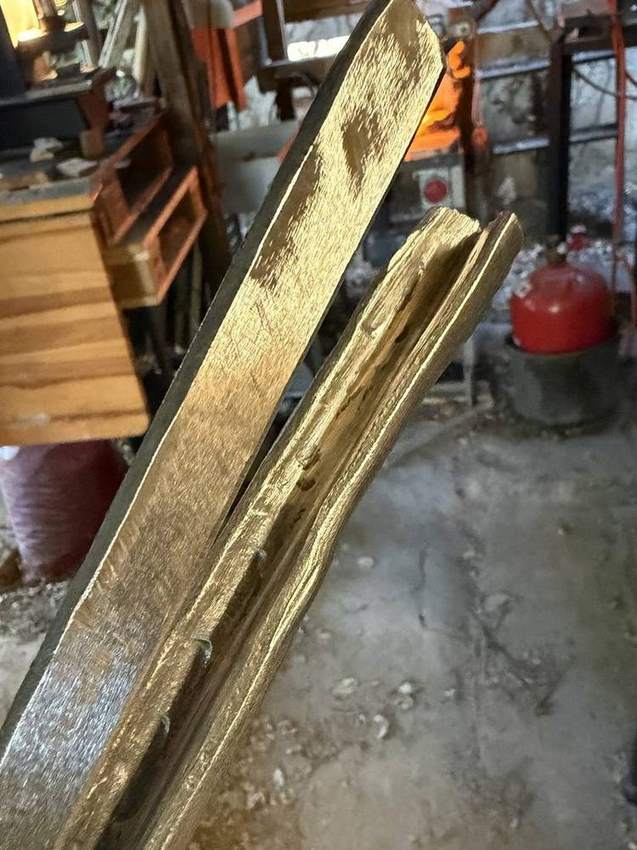
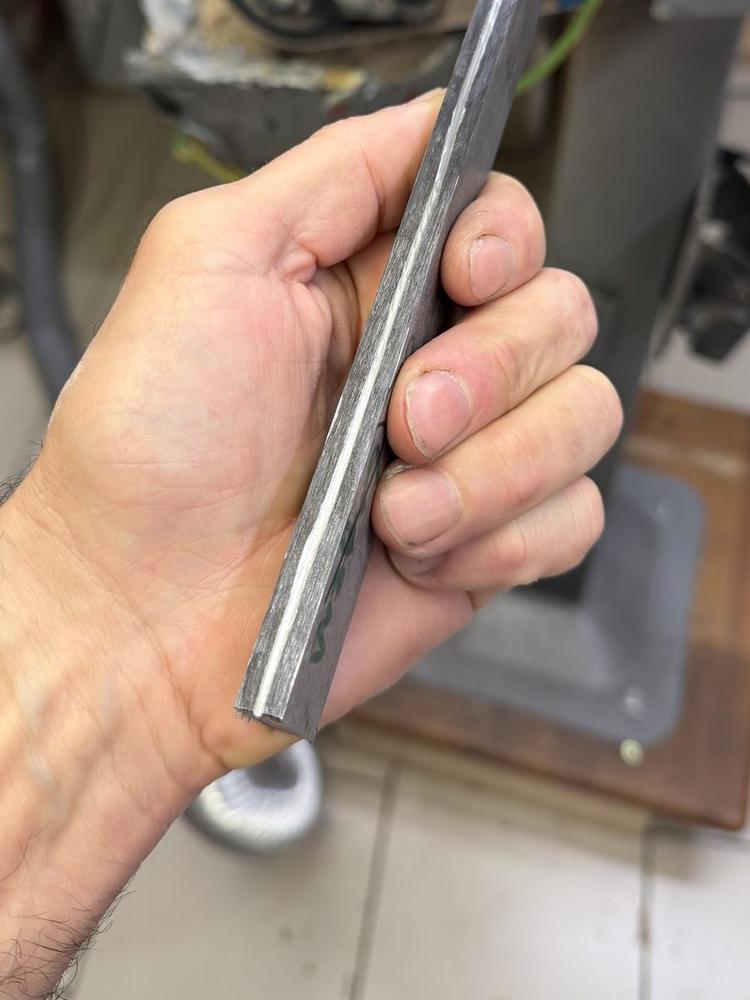
    The bright line shows where the Damascus is to be split so the Aogami core can later be set into it.

  3. Split open
    03

    Split open

    The Damascus is split lengthwise. The Aogami core goes into this split.

  4. In the fire
    04

    In the fire

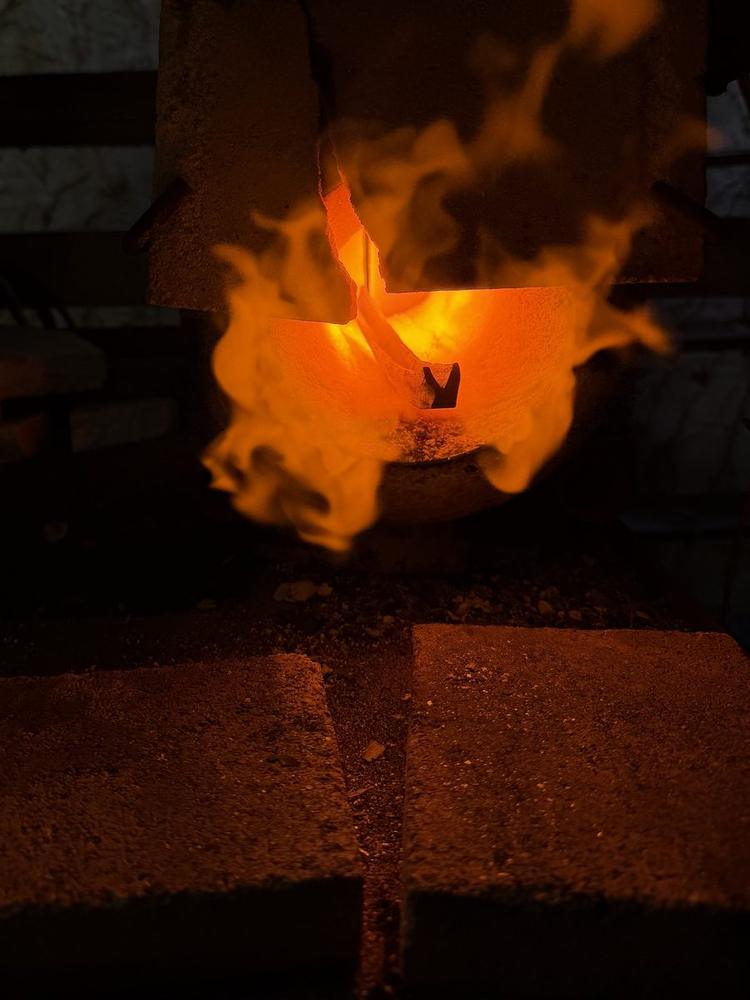
    In the gas forge, cladding and core are brought to welding heat and forge-welded together.

  5. Forged out
    05

    Forged out

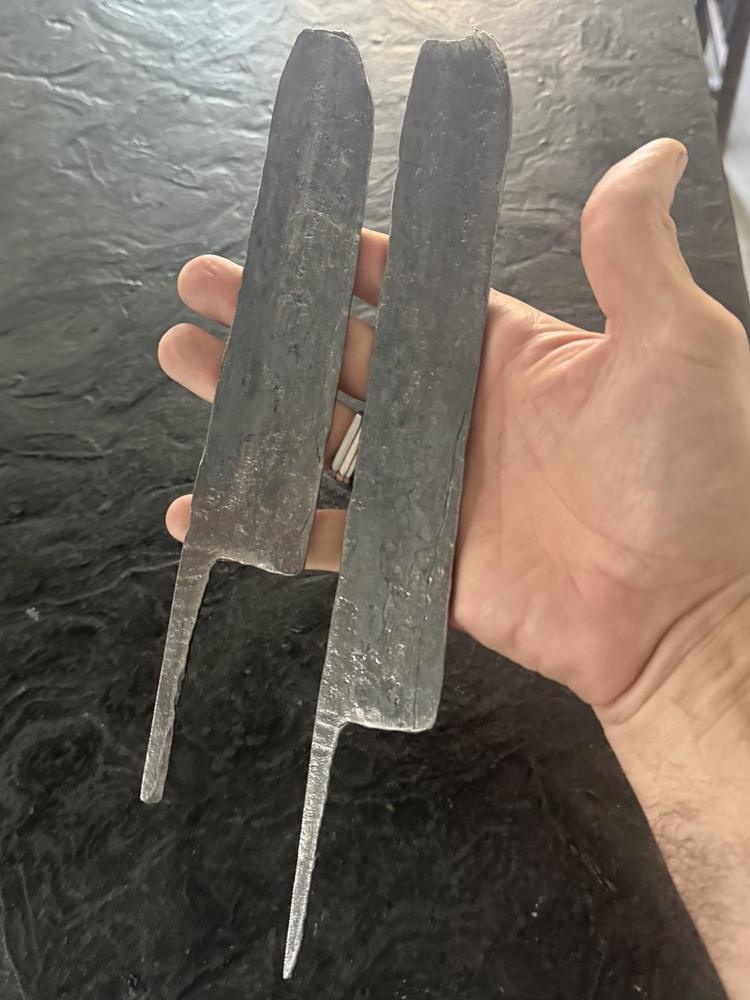
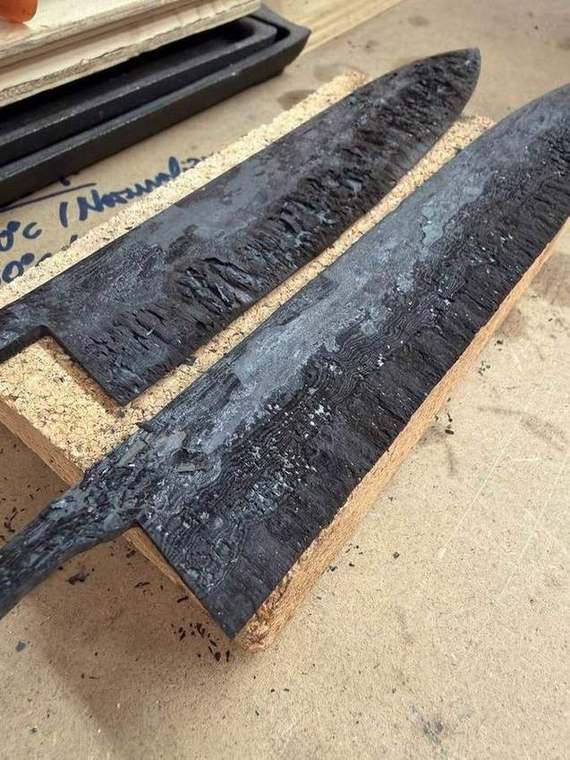
    The blanks with tang, still covered in scale, before the blade gets its shape.

  6. Hardening
    06

    Hardening

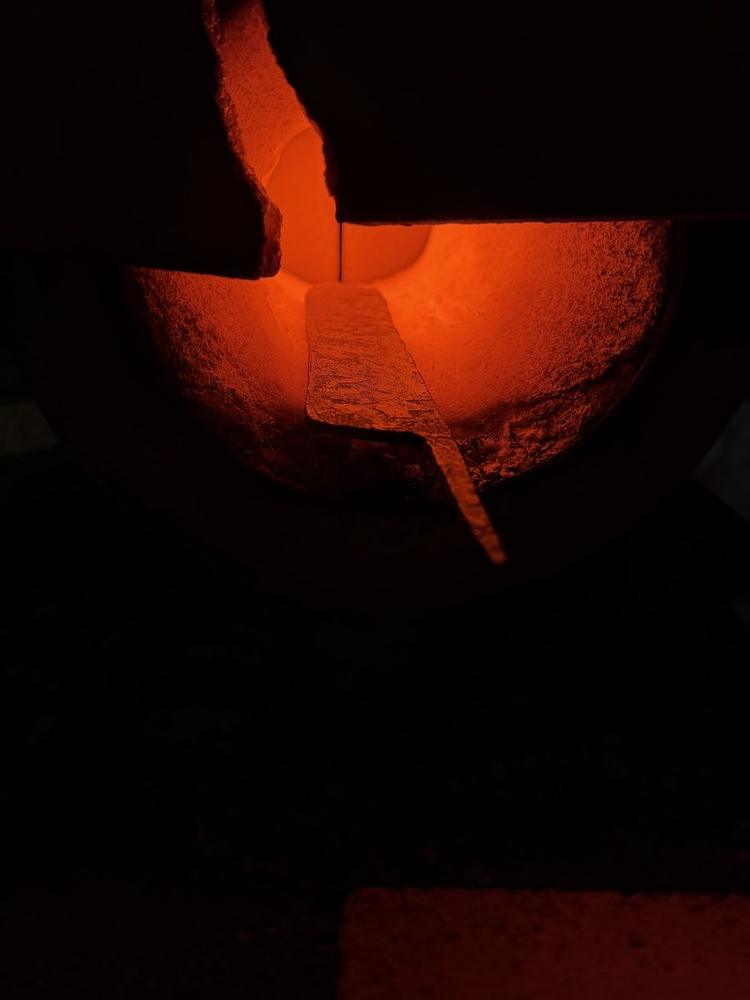
    At 820 °C in the oven, then quenched in oil at 60 °C.

  7. After hardening
    07

    After hardening

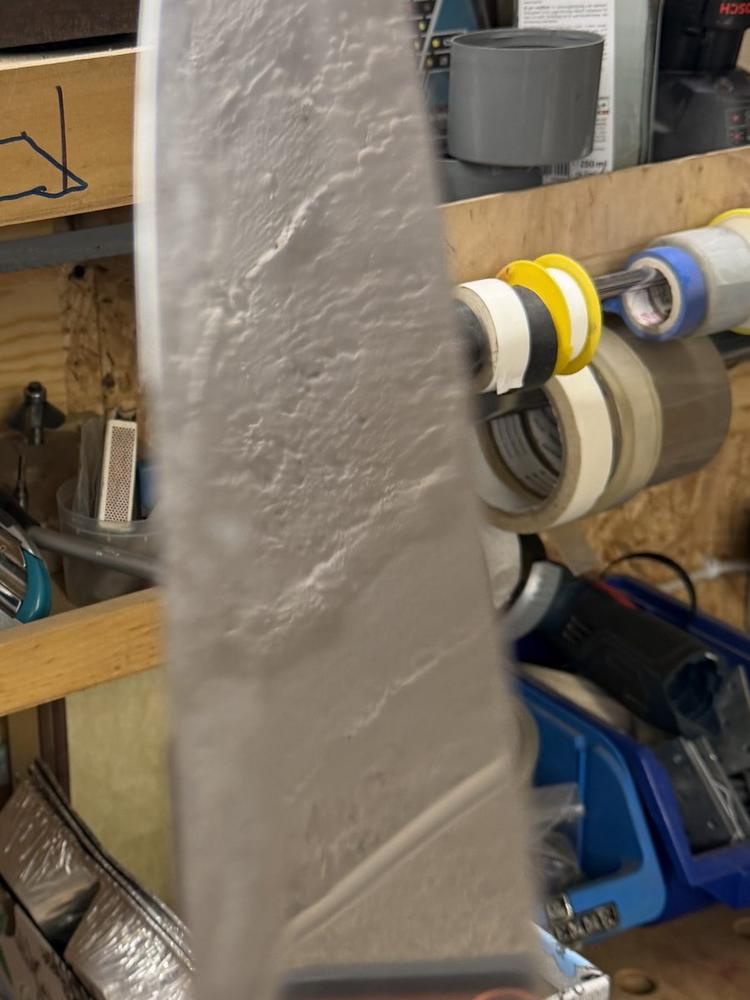
    Scale and oil residue on the blade. Now the steel is hard.

  8. The grind
    08

    The grind

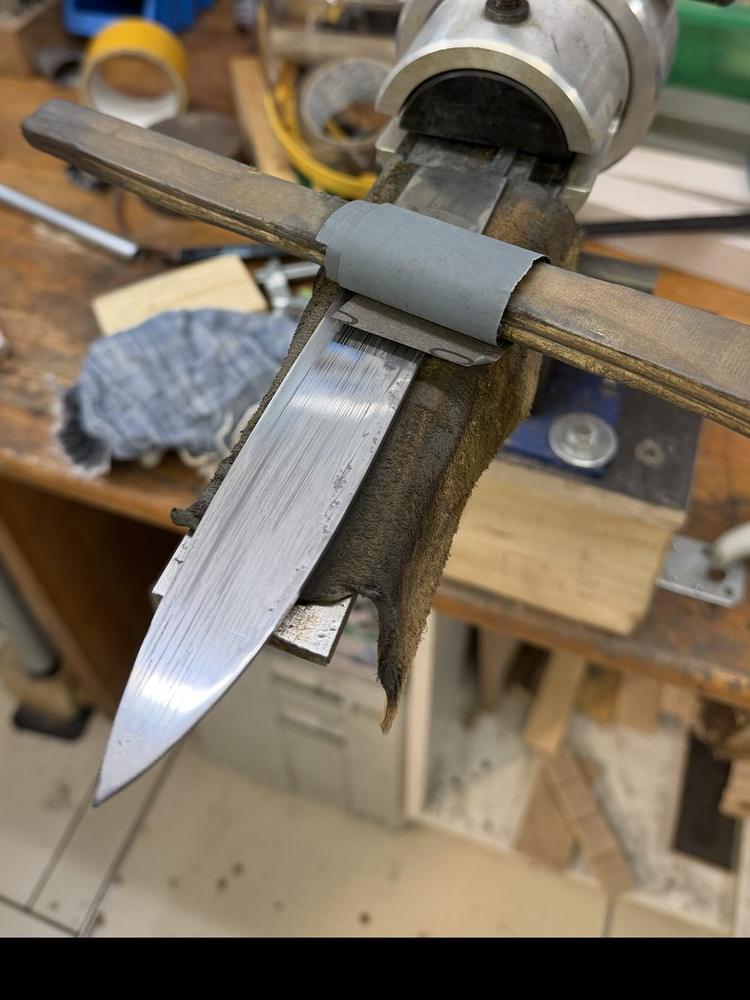
    Fine grinding by hand, with a slight hollow grind on the left.

  9. Bare steel
    09

    Bare steel

    Before etching, before the sea of clouds appears.

The little brother

Specifications

Steel
Cutting coreAogami, from Tadashi Enami, Sakai (Japan)
CladdingDamascus, 80 layers, forged by Roland
ConstructionWarikomi
PatternRandom · 80 layers
Finishetched
Etchferric chloride, coffee
Grindslightly hollow on the left (for right-handers)
ForgeGas
Working timeapprox. 22 hours
Heat treatment
Normalizing830 / 790 / 760 °C
Hardening820 °C
QuenchOil, 60 °C
Tempering2 × 1 h at 190 °C
Hardness
60HRC
estimated (file test)
Dimensions
Overall length350 mm
Blade length190 mm
Blade height35 mm
Spine thickness3 mm
Weight135 g
Handle
WoodOlive wood from Tuscany, not stabilized
FerruleWater buffalo horn
ShapeWa handle, octagonal
TangHidden tang
SayaOlive wood from the same piece, beech pin
Work
TypeSujihiki
Work no.9
CompletedSeptember 2026

The smith

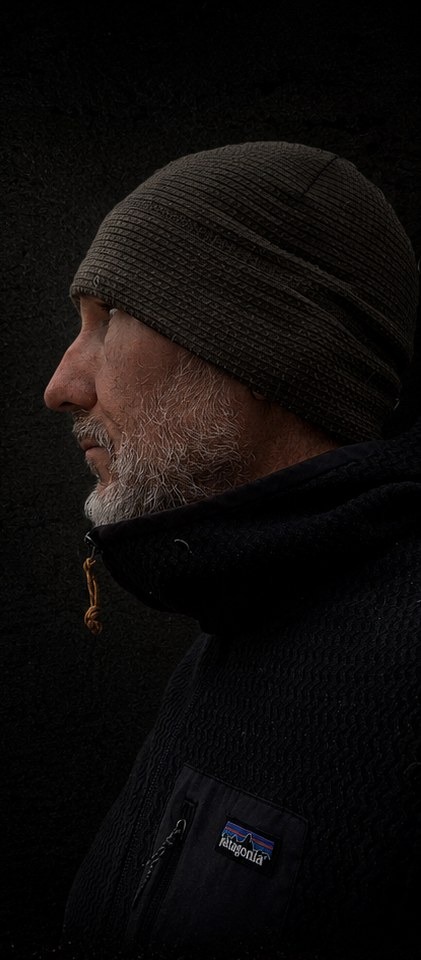
The smith behind DR BLADES

DR BLADES

DR are my initials and also stand for my academic degree. The pun was too good to just leave sitting around. As a drug hunter and researcher, I'm fascinated by how a small molecule has to be built so that it does exactly what it should at its biological target, and how, after a lot of optimization, it eventually becomes a drug. Structure determines function. One more or less atom, one bond that is twisted differently, and everything changes.

I find the very same thing at the forge. Here, too, shape and properties determine what a knife can do in the end. Hardly any material can be transformed like steel. The temperature control alone decides whether the same blade turns out soft, hard, too brittle or just right.

I bring many of my materials back from travels and outdoor activities. A rusty axe head found between the rocks on a Norwegian fjord, Aogami and Shirogami from Sakai in Japan, masur birch from Karelia, reindeer and moose antler from Lapland. Others come from our garden or from friends.

Each one carries a piece of history. It shouldn't disappear in the finished knife. The old iron is allowed to look old, the wood to show its wounds. That is exactly what each of my knives tells.

Care