DR BLADESDR Blades No. 13

Shirowa

One wheel alone goes nowhere.
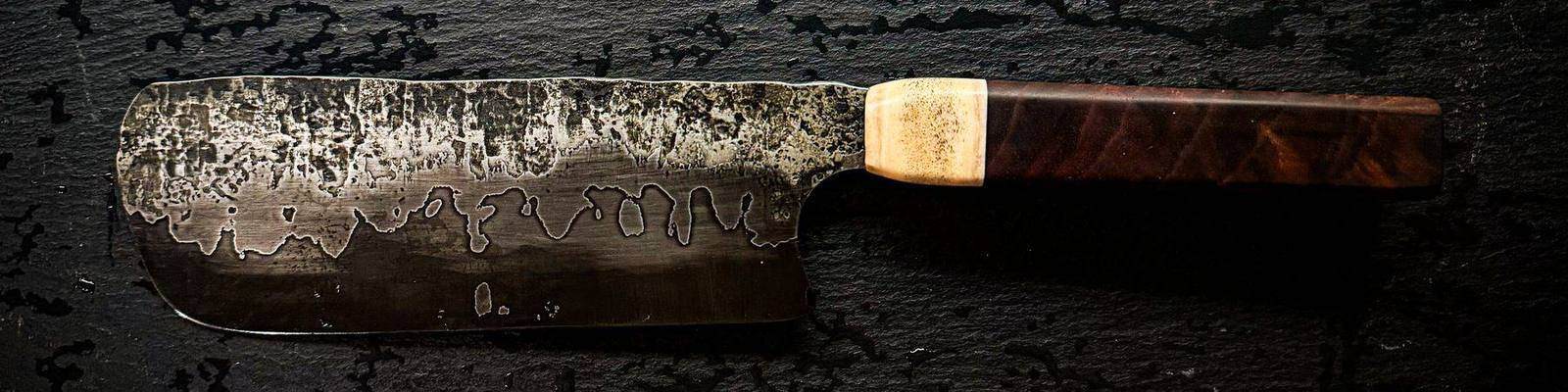
Shirowa – full knife
One old wheel, two new paths.
One is white, the other blue.
Only together does the cart roll.

Shirowa (白輪) means “white wheel.” The name links the steel of the edge, Shirogami, “white paper,” with the iron of the side layers, which comes from an old wagon wheel. Japanese has a saying, kuruma no ryōrin: “the two wheels of a cart.” It refers to two things that only make progress together. Shirowa is one of those two wheels, Aowa the other. Shirogami literally means “white paper.” The name comes from the packaging: the steelworks in Yasugi in Shimane Prefecture (Hitachi Metals, now Proterial) wraps its steel bars in colored paper so smiths can tell the grades apart – white paper for the plain carbon steel, blue paper for the alloyed one.

At a glance

Details

The story

When I came back from Japan in the summer of 2026, I had two pieces of steel in my luggage: Shirogami and Aogami, cut off the bar by Tadashi Enami in Sakai. I could hardly wait to try them out. How do they differ in the fire, under the hammer, during hardening, and later at the edge?

So I forged two knives side by side, my first Nakiri: Aowa for my wife and Shirowa for me. For the side layers of both I used iron from the same old 19th-century wagon wheel that Wadachi was made from. The cutting core of this knife is Shirogami, the purer of the two steels, without chromium and tungsten. It takes an especially fine edge. Aowa is made of Aogami, which has chromium and tungsten added. That makes it a little tougher, and it holds its edge longer.

Both blades are ground very thin, which makes them extremely sharp. I deliberately left the spine natural, with the marks of the forging. After etching, the boundary between the old wheel iron and the Japanese steel shows as a bright, restless line.
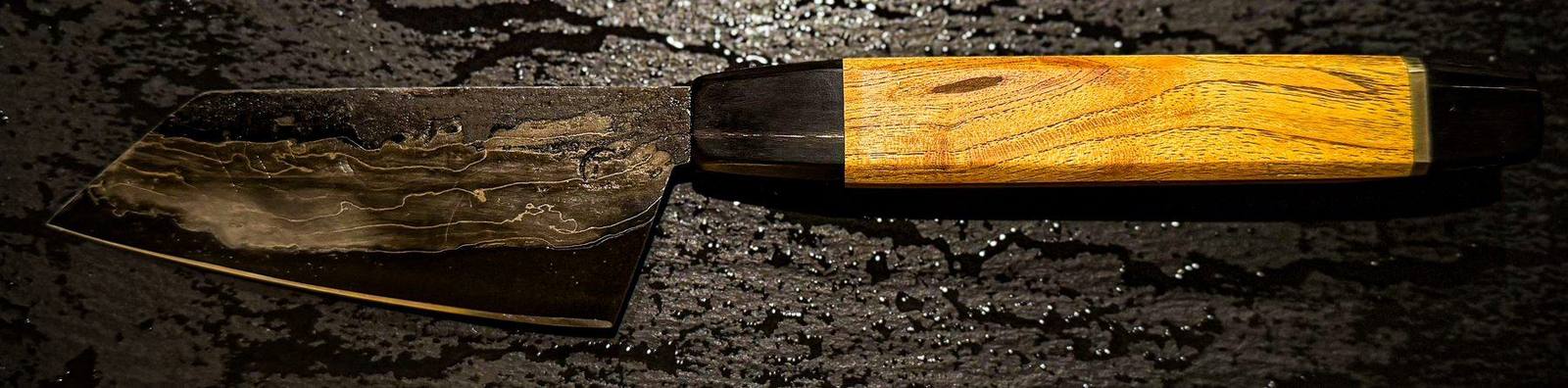
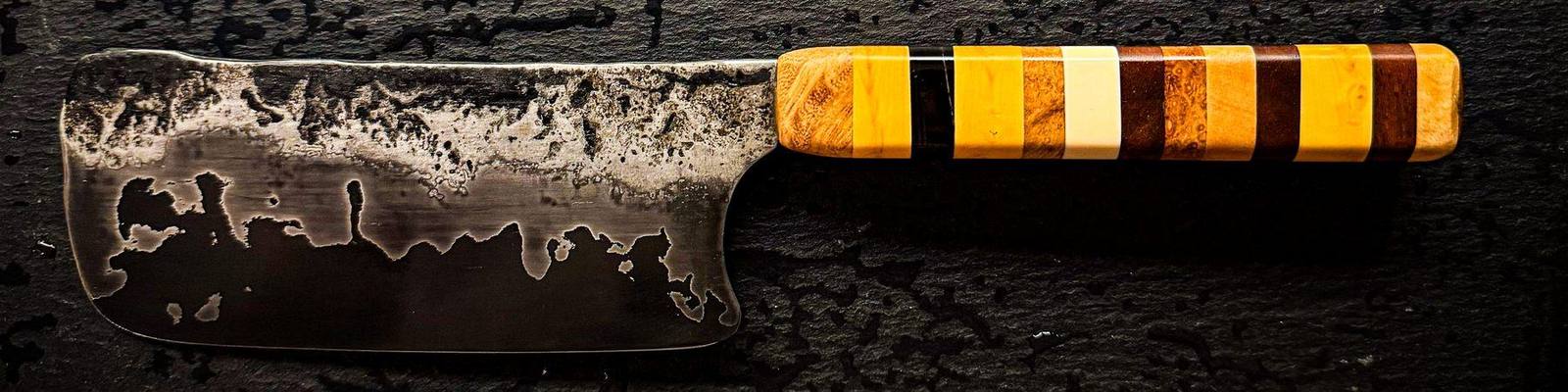
From the same wheel

Specifications

Steel
Cutting coreShirogami, from Tadashi Enami, Sakai (Japan)
Side layersWrought iron from a wagon wheel (19th c., Germany)
ConstructionSan Mai
Finishetched, spine left natural
Etchferric chloride, coffee
ForgeGas
Working timeapprox. 21 hours
Heat treatment
Normalizing830 / 790 / 760 °C
Hardening820 °C
QuenchOil, 60 °C
Tempering2 × 1 h at 190 °C
Hardness
>60HRC
estimated (file test)
Dimensions
Overall length285 mm
Blade length155 mm
Blade height53 mm
Spine thickness2.4 mm
Weight175 g
Handle
WoodAmerican walnut, not stabilized
FerruleRed deer antler
ShapeWa handle, rectangular
TangHidden tang
Work
TypeNakiri
Work no.13
CompletedAugust 2026

The smith

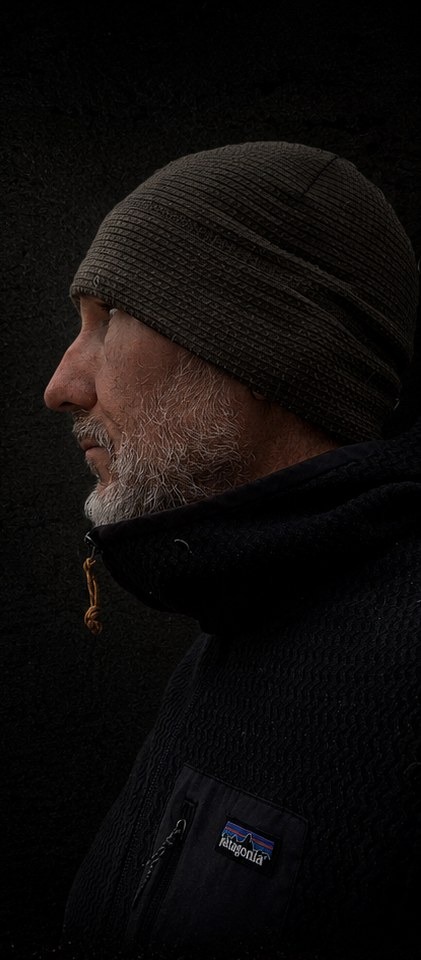
The smith behind DR BLADES

DR BLADES

DR are my initials and also stand for my academic degree. The pun was too good to just leave sitting around. As a drug hunter and researcher, I'm fascinated by how a small molecule has to be built so that it does exactly what it should at its biological target, and how, after a lot of optimization, it eventually becomes a drug. Structure determines function. One more or less atom, one bond that is twisted differently, and everything changes.

I find the very same thing at the forge. Here, too, shape and properties determine what a knife can do in the end. Hardly any material can be transformed like steel. The temperature control alone decides whether the same blade turns out soft, hard, too brittle or just right.

I bring many of my materials back from travels and outdoor activities. A rusty axe head found between the rocks on a Norwegian fjord, Aogami and Shirogami from Sakai in Japan, masur birch from Karelia, reindeer and moose antler from Lapland. Others come from our garden or from friends.

Each one carries a piece of history. It shouldn't disappear in the finished knife. The old iron is allowed to look old, the wood to show its wounds. That is exactly what each of my knives tells.

Care