DR BLADESDR Blades No. 22

Michinori

Thirty years of road, in one blade.
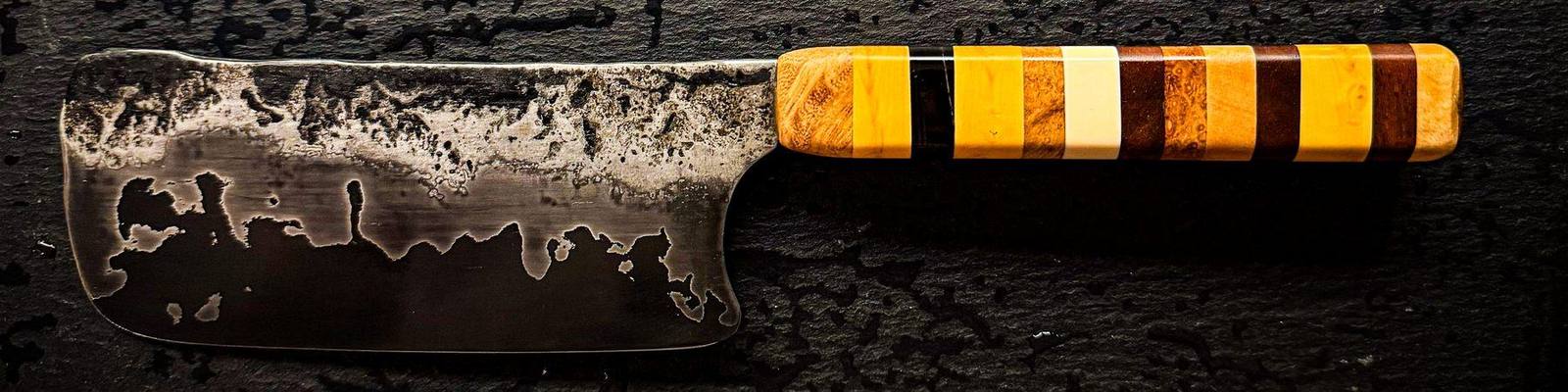
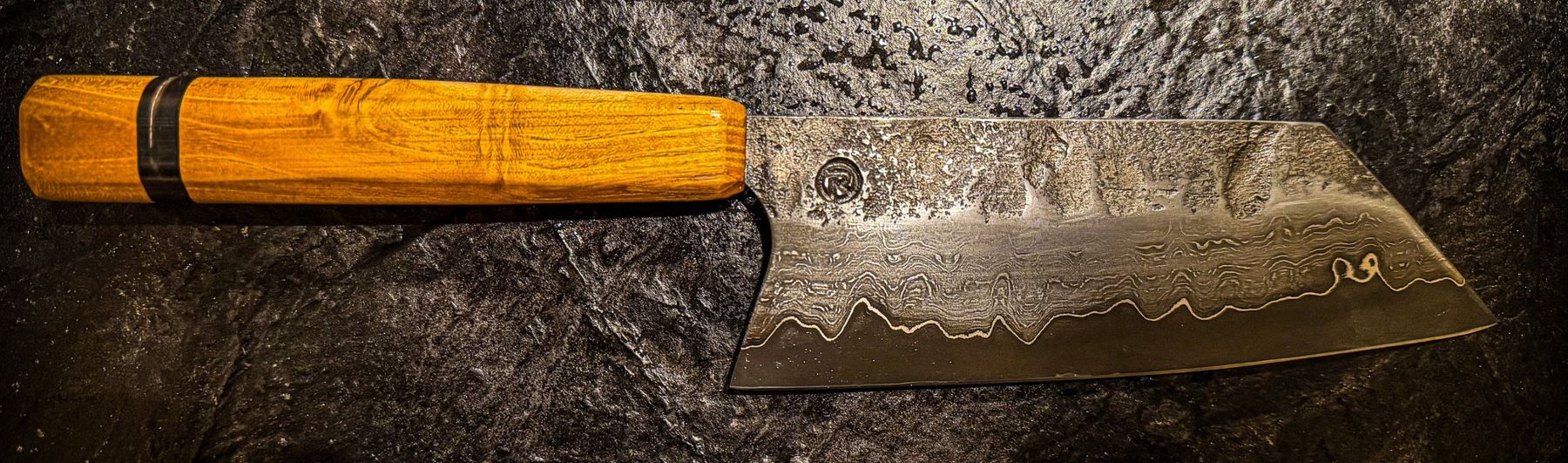
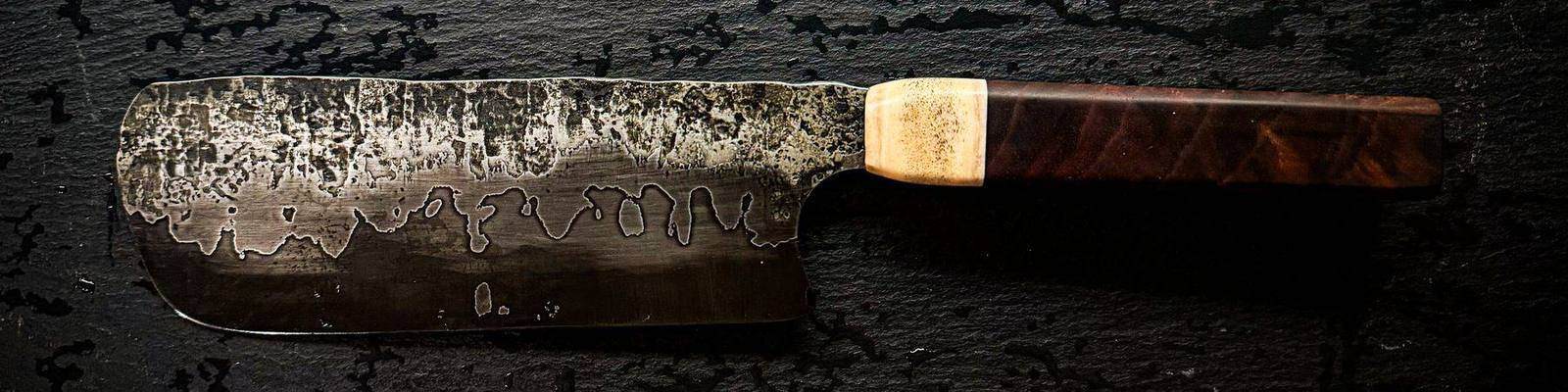
Michinori – full knife
A wheel that has travelled long roads.
A kitchen in Greifswald, thirty years ago.
Both are now in this steel.

Michinori (道のり) is Japanese for the road one has travelled.

At a glance

Details

The story

Michinori is for a fellow student from Greifswald. Thirty years ago we studied there together. I have known her as long as I have known my dear wife, because the two of them shared a flat back then. She, too, found the love of her life while studying.

Back then we often cooked together. So for her milestone birthday she gets a knife for the kitchen.

I deliberately forged the side layers from an old wagon wheel. A wheel like that has a long road behind it, and that is exactly what the knife is meant to recall: the time back then and the road we have travelled since. After etching you can see the old puddled iron with its fibrous structure in the steel, and the bright lines of the thin nickel foil. The cutting core is Apex Ultra.
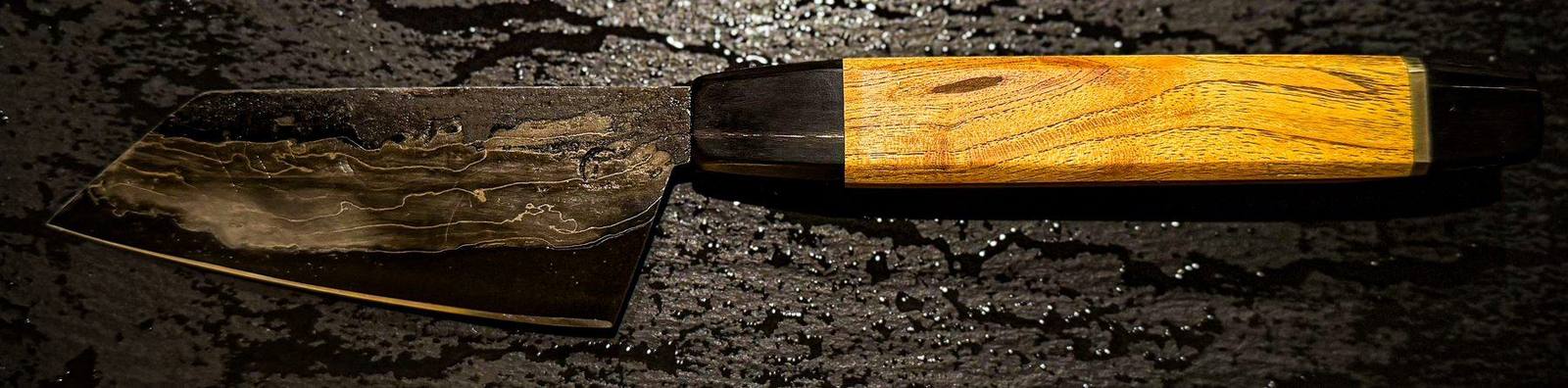
Also from a wagon wheel

Specifications

Steel
Cutting coreApex Ultra
Side layerspuddled iron from an old wagon wheel, with thin nickel foil
ConstructionSan Mai
Patternpuddled iron, revealed by etching and sanding with 3000 grit paper
Etchferric chloride, coffee
Grindlargely single-bevel (right)
ForgeGas
Working timeapprox. 21 hours
Heat treatment
Normalizing950 / 780 / 780 °C
Hardening850 °C
QuenchOil, 60 °C
Tempering2 × 1 h at 200 °C
Hardness
57HRC
estimated (file test)
Dimensions
Overall length290 mm
Blade length157 mm
Blade height55 mm
Spine thickness4 mm at the tang, 6 mm towards the tip
Weight228 g
Balance pointforward, because the blade gets thicker towards the tip
Handle
Woodcherry laurel from our garden
End capwith water buffalo horn and NFC chip
ShapeWa handle, octagonal
TangHidden tang
Work
TypeBunka
Work no.22
CompletedNovember 2026

The smith

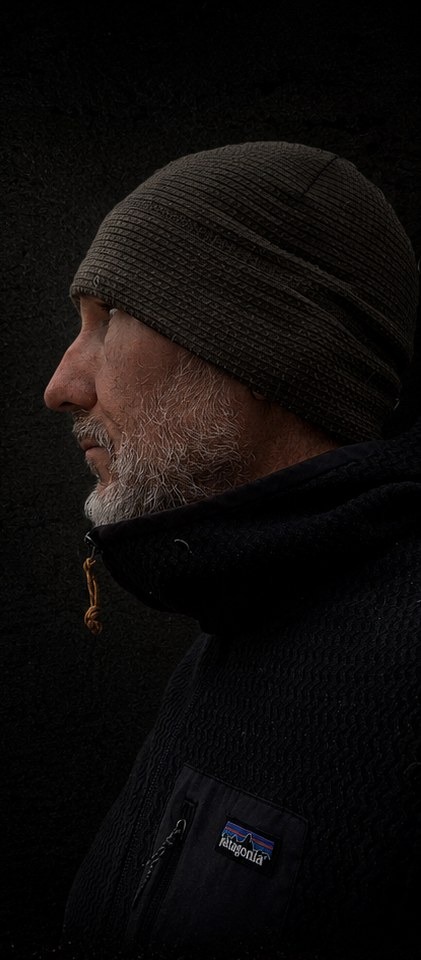
The smith behind DR BLADES

DR BLADES

DR are my initials and also stand for my academic degree. The pun was too good to just leave sitting around. As a drug hunter and researcher, I'm fascinated by how a small molecule has to be built so that it does exactly what it should at its biological target, and how, after a lot of optimization, it eventually becomes a drug. Structure determines function. One more or less atom, one bond that is twisted differently, and everything changes.

I find the very same thing at the forge. Here, too, shape and properties determine what a knife can do in the end. Hardly any material can be transformed like steel. The temperature control alone decides whether the same blade turns out soft, hard, too brittle or just right.

I bring many of my materials back from travels and outdoor activities. A rusty axe head found between the rocks on a Norwegian fjord, Aogami and Shirogami from Sakai in Japan, masur birch from Karelia, reindeer and moose antler from Lapland. Others come from our garden or from friends.

Each one carries a piece of history. It shouldn't disappear in the finished knife. The old iron is allowed to look old, the wood to show its wounds. That is exactly what each of my knives tells.

Care