DR BLADESDR Blades No. 21

Tomoshibi

Small lights in dark steel.
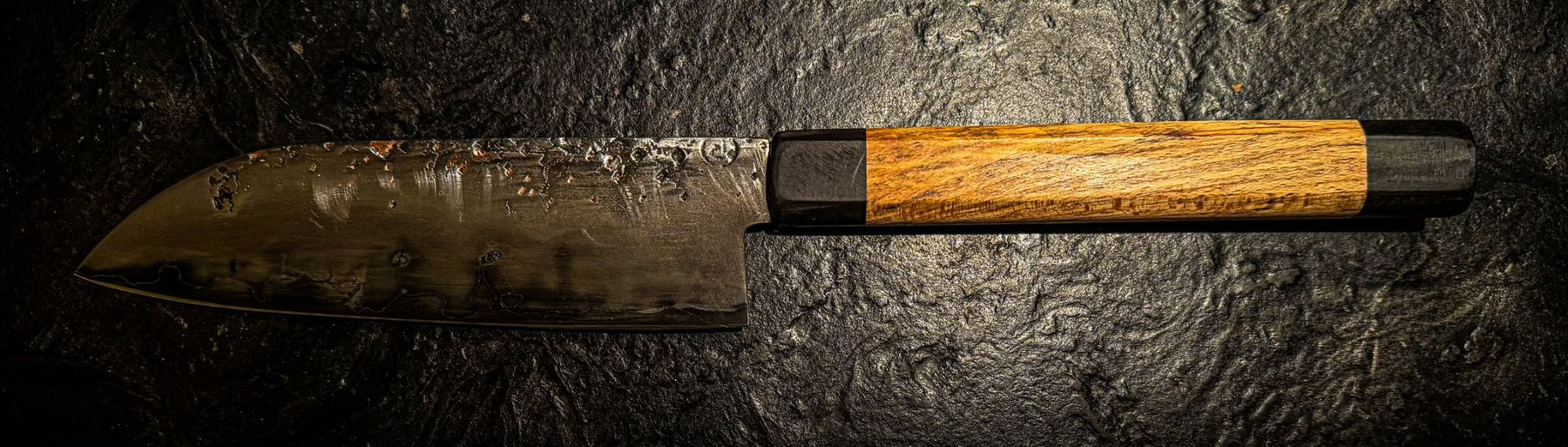
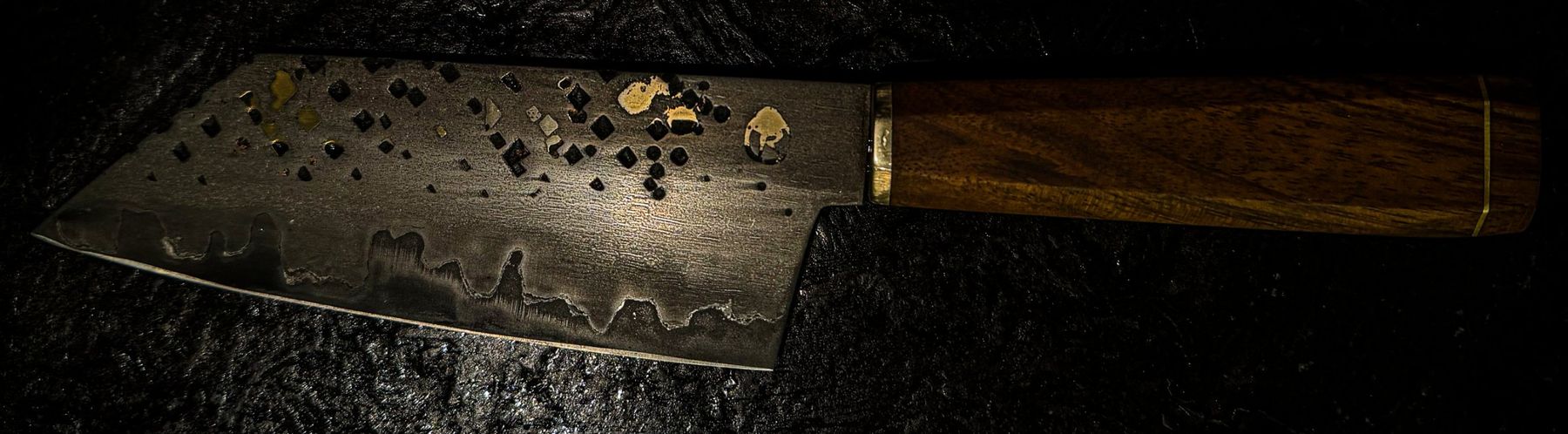
Tomoshibi – full knife
Brass and copper, flowed into the diamonds left by the swage.
Golden and reddish spots in the dark steel,
like lit windows at night.

Tomoshibi (灯火) is Japanese for a light in the dark, such as that of a lamp or a lit window.

At a glance

Details

The story

Tomoshibi is my next attempt at working copper and brass into the blade. With Uzumibi I had melted the copper directly onto the surface. This time I used the respective brazing alloys.

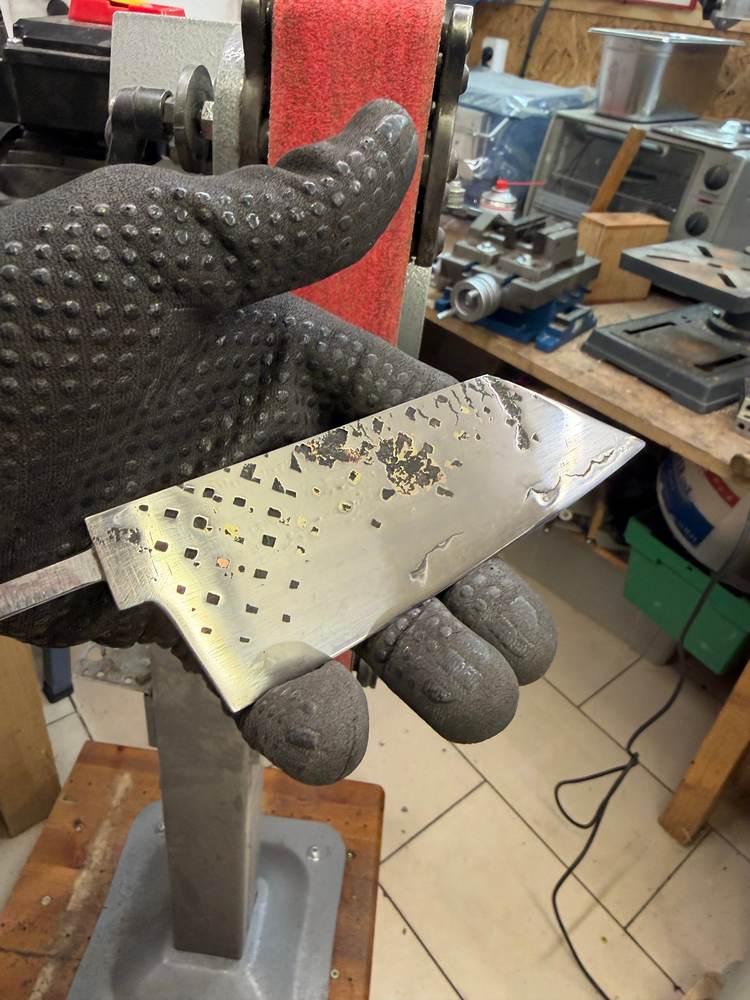
Again I worked the surface of the blade with the hammer that has a diamond pattern cut into its face and that I use as a swage in the press. On the blade prepared this way I placed the brazing alloy, already embedded in flux, in small pieces where it fit, and then into the forge it went. I could clearly see how the molten brass in particular wets the steel well. It runs into the recesses and settles flat inside them.

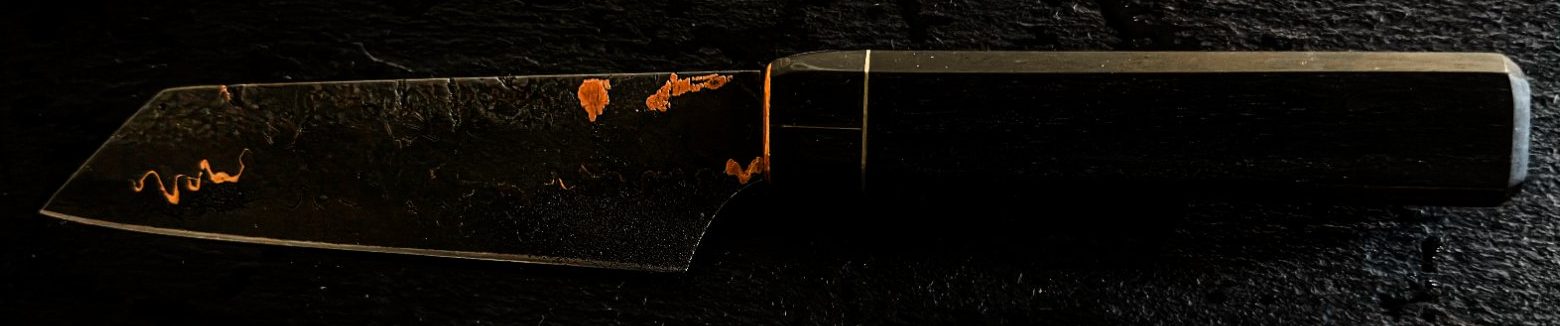
After the forge: copper and brass in the diamonds left by the swage (Tomoshibi below)

On the finished blade the brass spots sit golden and the copper reddish in the dark steel, like lights at night.
From material to blade

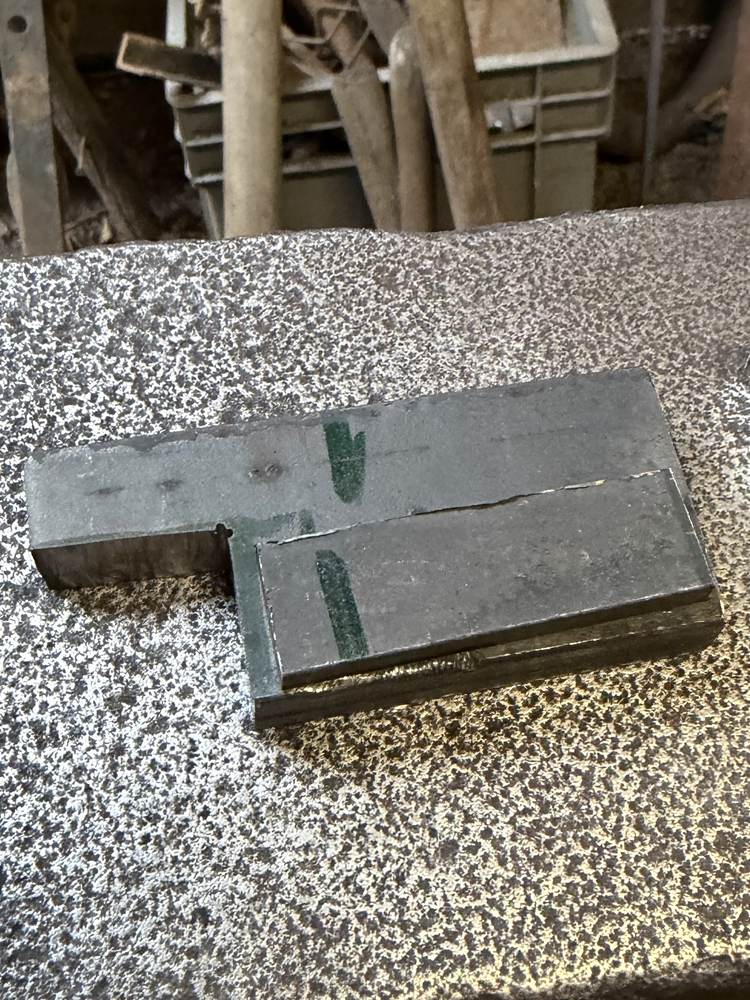
  1. The billet
    01

    The billet

    The cutting core in the split mild steel, ready to be forge welded using the warikomi method.

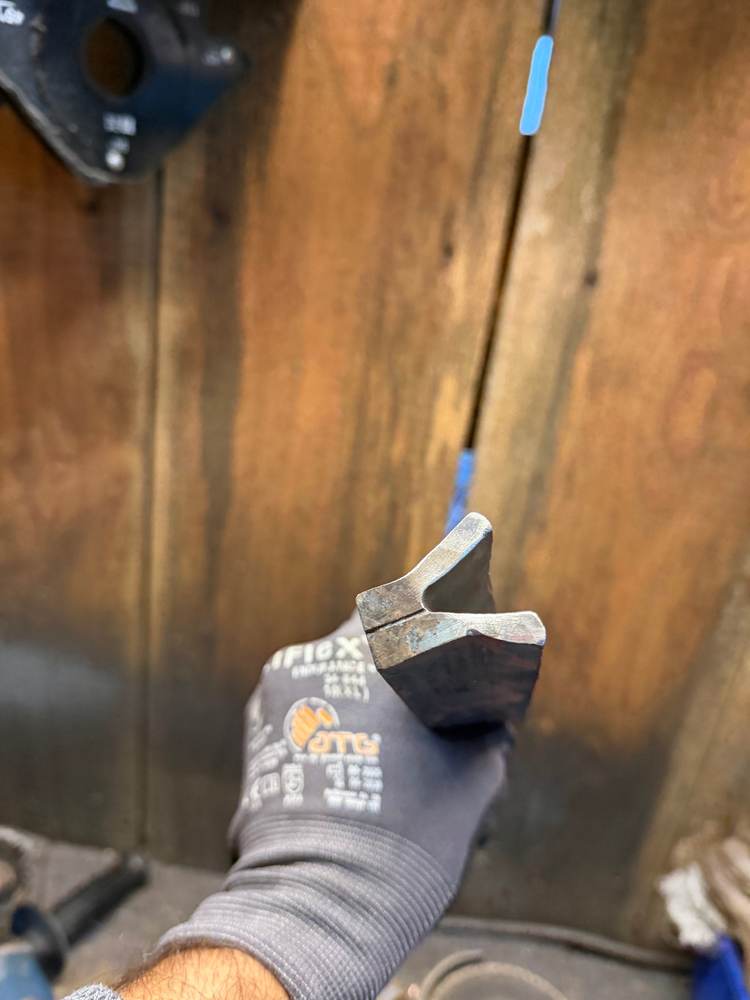
  2. The swage
    02

    The swage

    The hammer with the cut diamond pattern that I use as a swage in the press.

  3. The grind
    03

    The grind

    On the belt grinder, the brass and copper in the diamonds come to light.

Of copper and steel

Specifications

Steel
Cutting coreShirogami, set in offcuts of 75Ni8
CladdingMild steel
ConstructionWarikomi
Finishdiamond pattern from the swage, brass and copper brazing alloy melted on in the forge after forging
Etchferric chloride, coffee
ForgeGas
Working timeapprox. 12 hours
Heat treatment
Hardening840 °C, in the forge
QuenchOil, 60 °C
Tempering2 × 1 h at 200 °C
Hardness
62HRC
measured (Rockwell)
Dimensions
Overall length250 mm
Blade length130 mm
Blade height50 mm
Spine thickness3.9 mm
Weight149 g
Handle
Woodwalnut from our own garden, stabilised
Ferrulea single piece of brass
ShapeWa handle, octagonal
TangHidden tang
Work
TypeBunka
Work no.21
CompletedNovember 2026

The smith

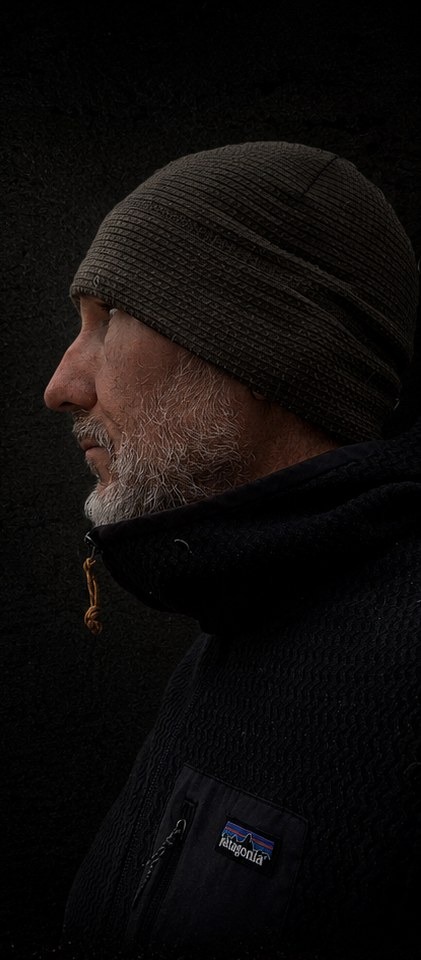
The smith behind DR BLADES

DR BLADES

DR are my initials and also stand for my academic degree. The pun was too good to just leave sitting around. As a drug hunter and researcher, I'm fascinated by how a small molecule has to be built so that it does exactly what it should at its biological target, and how, after a lot of optimization, it eventually becomes a drug. Structure determines function. One more or less atom, one bond that is twisted differently, and everything changes.

I find the very same thing at the forge. Here, too, shape and properties determine what a knife can do in the end. Hardly any material can be transformed like steel. The temperature control alone decides whether the same blade turns out soft, hard, too brittle or just right.

I bring many of my materials back from travels and outdoor activities. A rusty axe head found between the rocks on a Norwegian fjord, Aogami and Shirogami from Sakai in Japan, masur birch from Karelia, reindeer and moose antler from Lapland. Others come from our garden or from friends.

Each one carries a piece of history. It shouldn't disappear in the finished knife. The old iron is allowed to look old, the wood to show its wounds. That is exactly what each of my knives tells.

Care