The story
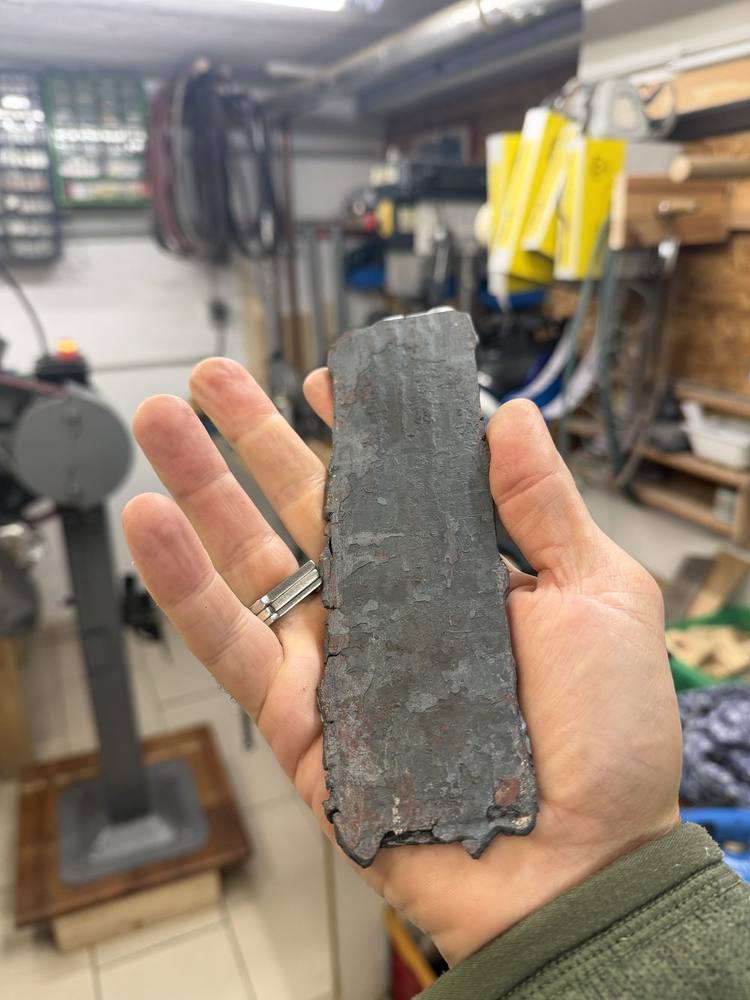
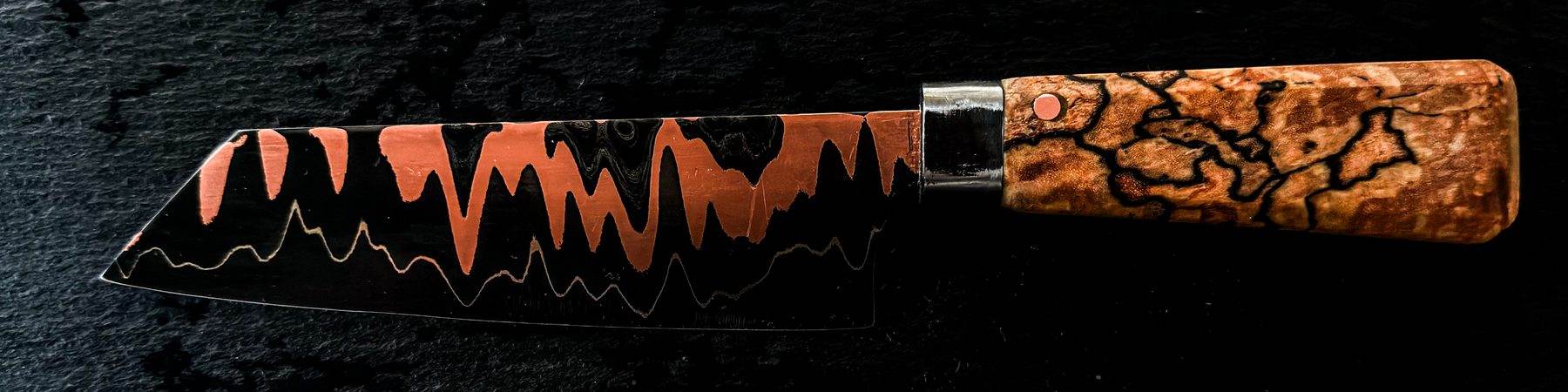
This knife was meant to be a Cu-Mai: a blade with a layer of copper between the cutting core and the Damascus that shows up in the end as a fine, even line.
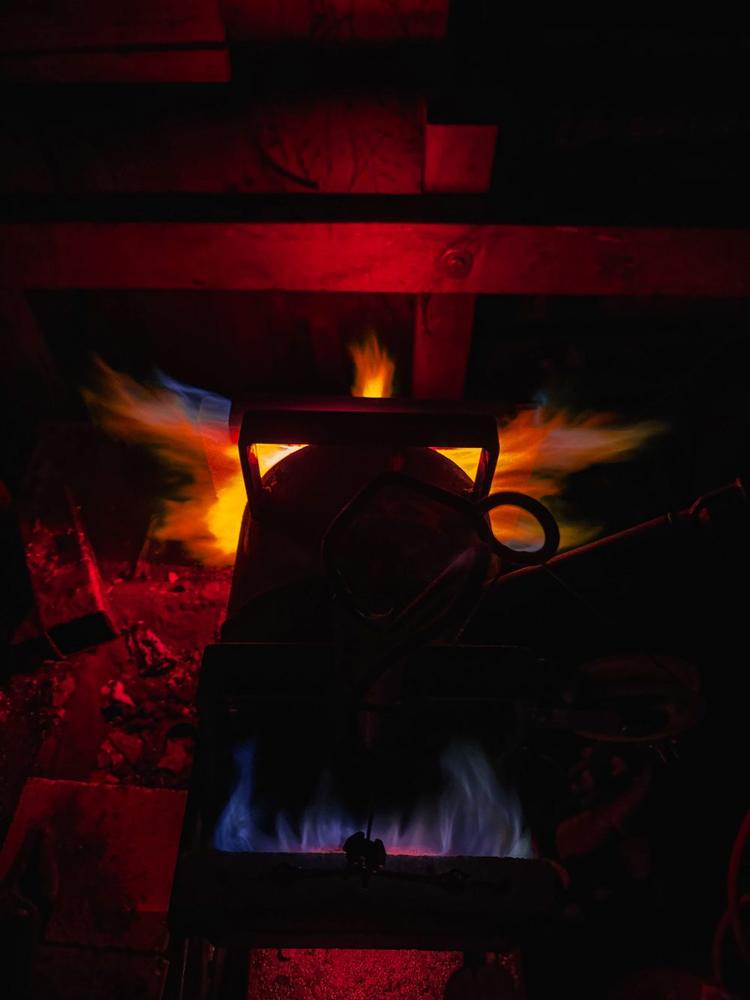
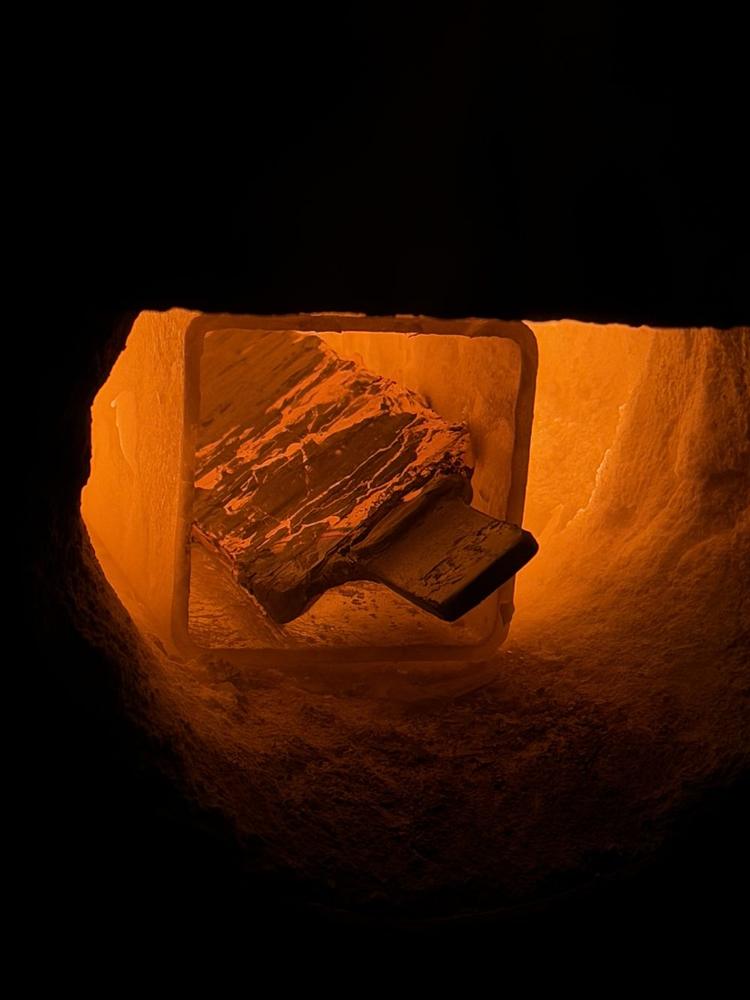
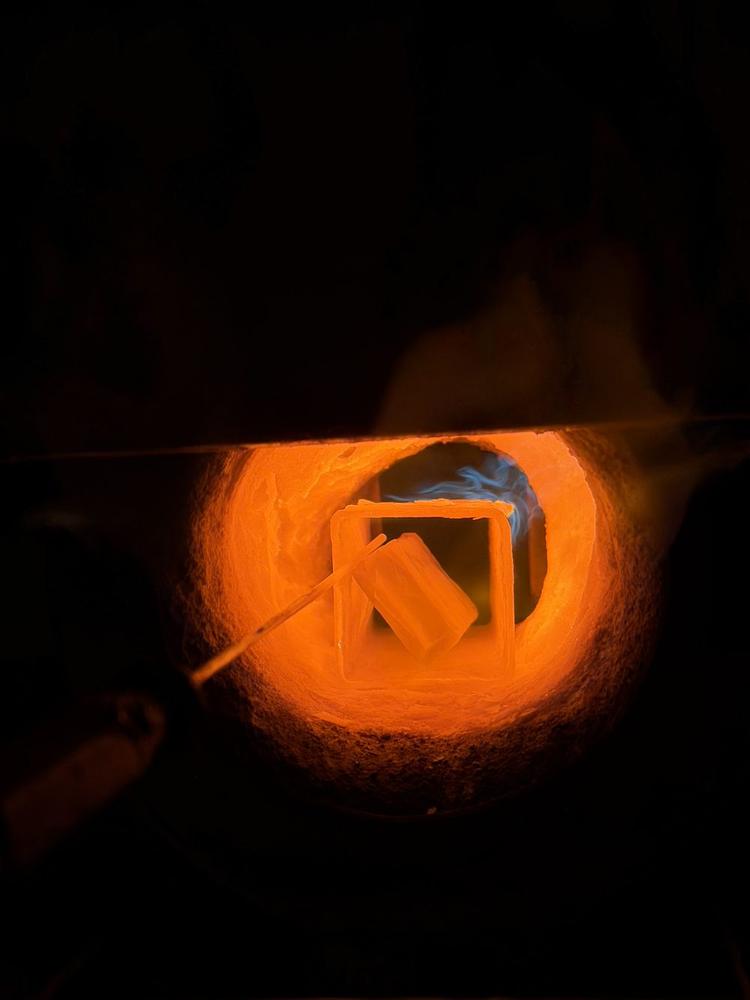
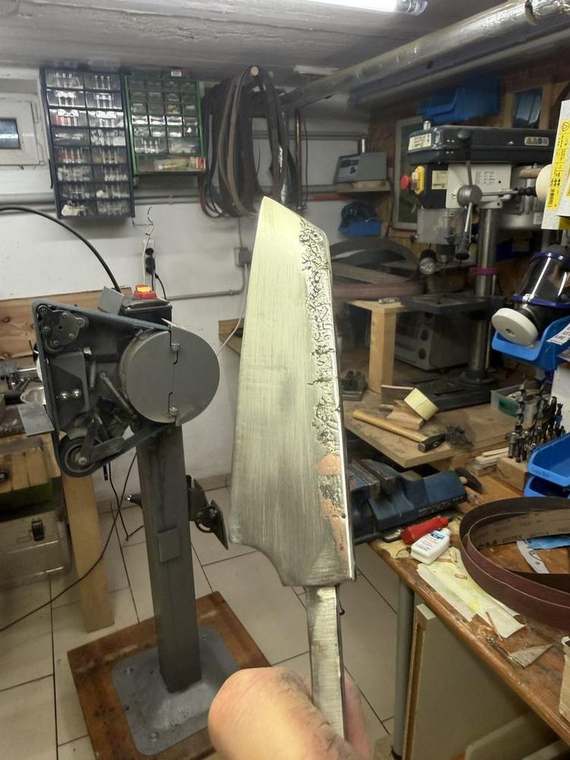
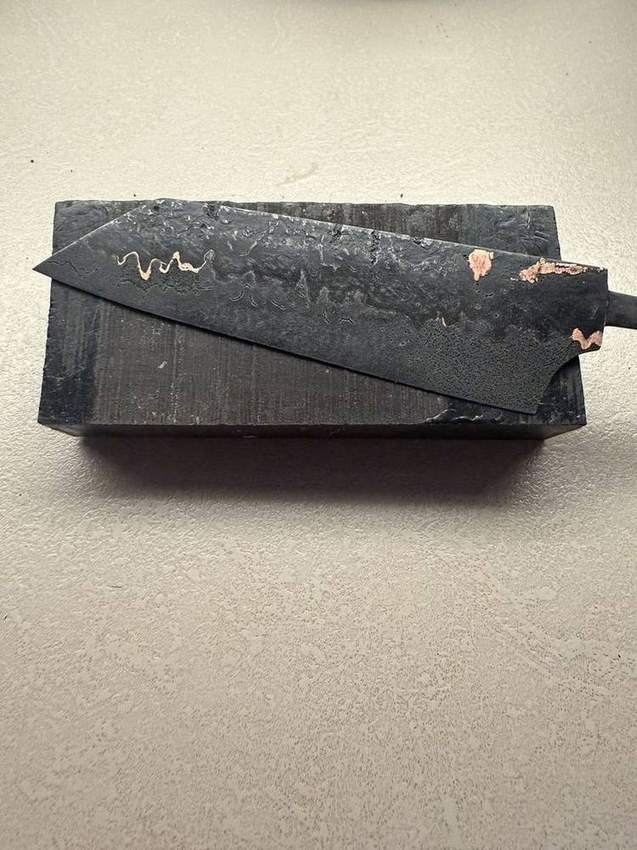
It turned out differently. The forge was too hot, and the copper ran out before the layers had welded. Before that came many hours of work and numerous attempts to find exactly the right temperature. Copper melts at around 1085 °C, while steel only welds from just below that to just above it. The window is narrow, and this time I was on the wrong side of it.
I could have scrapped the billet. Instead I forged it to the end. Not perfect, but this knife wears its story openly. It reminds me that you can still make something good out of a failure, and that the scars are sometimes the most beautiful part of a piece.
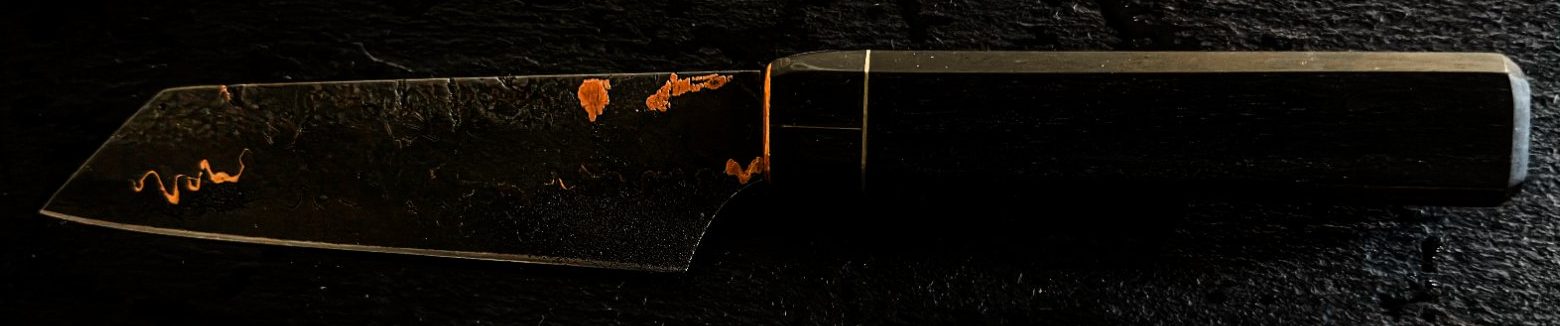
Kintsugi is the Japanese art of mending broken ceramics with gold, so the lines of the break stay visible and shine. An object’s history is shown rather than hidden. On the Kuro-Samurai, the copper took on that role. Where it ran out, it now runs as a glowing trace through the dark Damascus, like gilded cracks in an old bowl.
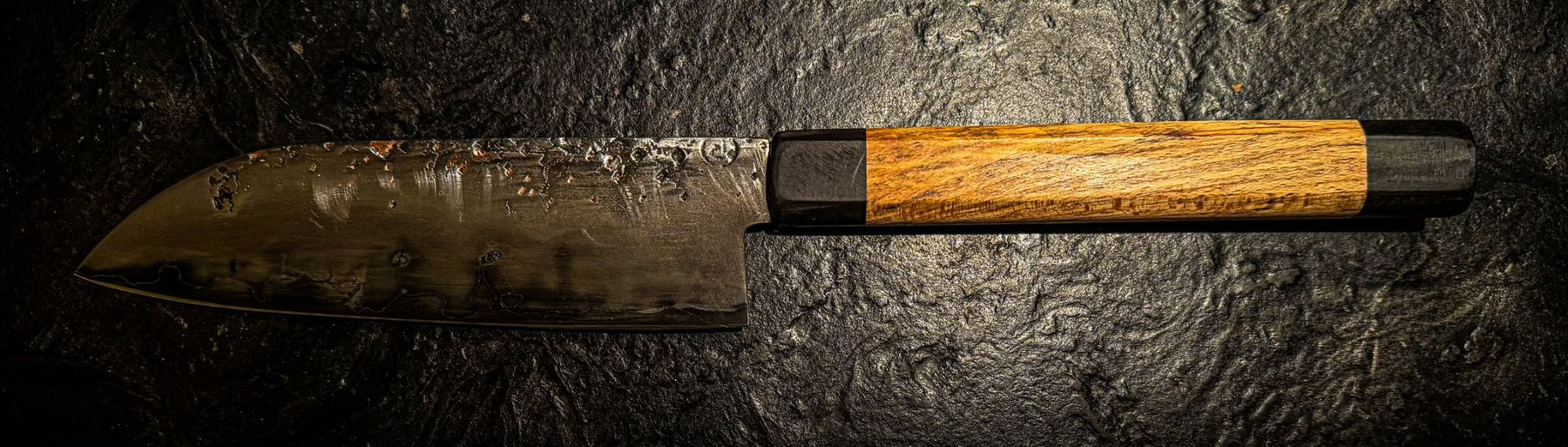
Between the rough Damascus layers sits the Apex Ultra edge. The ebony handle comes from an old tabletop.