 DR BLADES
The thing with the NFC chips
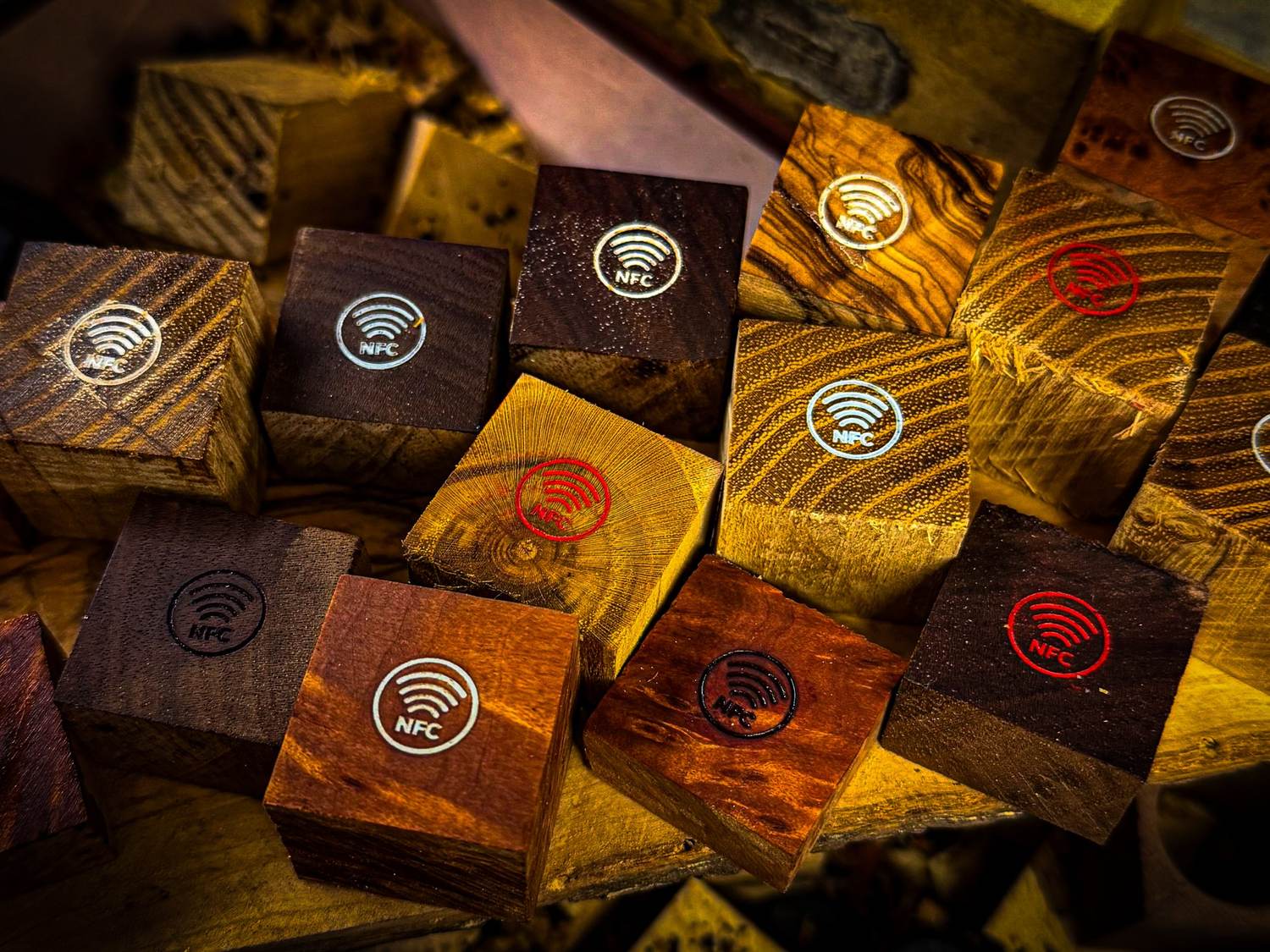
One thing runs through my life like a common thread … I like to document things and I enjoy telling stories. Not everyone is interested in my stories, and maybe that has to do with how I tell them :-) But I myself have benefited enormously from my parents capturing so much of us kids. In the seventies and eighties my mother put together elaborate photo albums, and my father filmed on Regular 8: us kids, the vacations, life, and he added sound to all of it afterward. When the projector and screen were set up and the tape was synced, it was an event. Even later, as adults, we kept going back to it.
The story in the handle
A knife like this holds many hours of work, often spread over days, with all the thoughts, impressions and setbacks too. Finding the steel, preparing it, welding the billet, forging out the blade, shaping it, hardening, grinding, building the handle, sharpening. Every single step is super complex in its own right, and with each one the story grows a little more. At the end there is an everyday object that hopefully does its job and makes people satisfied or even happy. But you often can’t see the story behind it.
You could of course film it, or write it down, print it out and include it. But that never really convinced me. It’s a fluid process that sometimes sits idle for a while, and then you’d have to edit it all as well. Then I came up with the idea of an NFC chip that links to the page of each knife. The beauty of it is that it’s up to each person … Anyone who wants to holds their smartphone to the handle and reads the story. Anyone who doesn’t, doesn’t. The choice is yours. And, best of all, the certificate can’t get lost, because it’s inside the knife. My knives are gifts, I pass them on, and maybe someday they’ll be passed on again. Even decades from now, the story will still be in the handle :-)
Making it work
Making it work wasn’t trivial. The first chips were only a few millimeters across and didn’t work in wood at all. After a lot of trial and error I found a design with an antenna that is strong enough and also works on metal. I then set it into the end of the handle using a special technique.
Then, looking at my Japanese knives, I noticed that the Wa handles almost always carry a stamped mark on the end. No doubt the mark of the smith or of the other craftsmen involved, and the mark is always filled in red. When I bought a few Wa handles in Japan that summer and they briefly disappeared into the back room and came back with freshly stamped marks, that was the final push, and my concept was nearly complete.
I had my own stamp made with the NFC symbol. That way anyone can see at a glance that there is something stored here. I made the first attempts with my wife’s nail polish: strike the stamp, apply the polish, let it cure and sand it back off so the color stays only in the recess.
That’s how it came about. My original idea was to create a slim PDF for each knife. A few photos, a bit of the story, the key dimensions. But then this website grew out of it. So alongside the craft itself, I found a second way to let others share in it.