
DR BLADESDR Blades No. 19

Kveik

This is where it started.
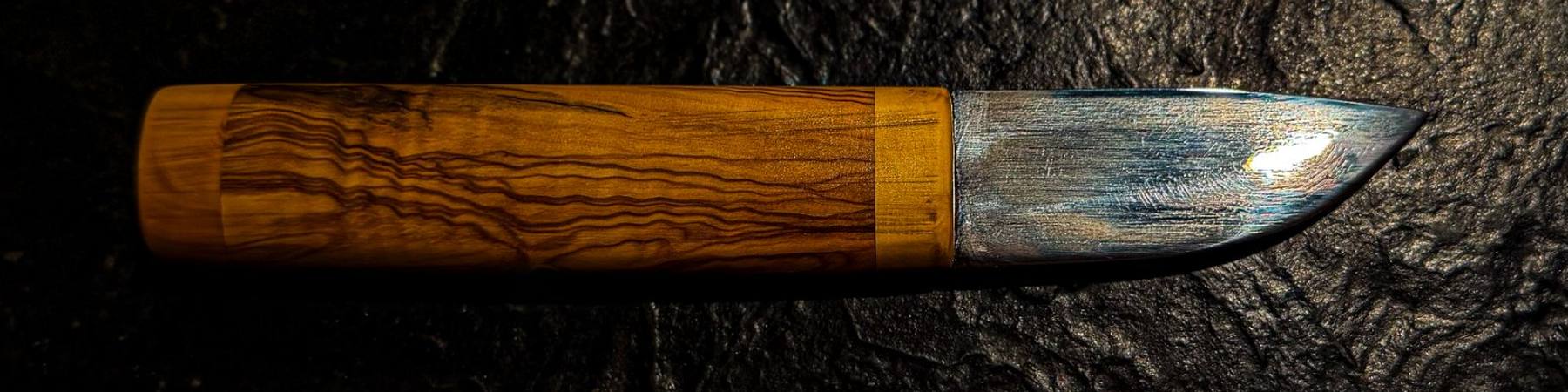
Kveik – full knife
A blade that was already finished.
A handle that bears a mark.
A cone that knows the hardness.

Kveik is Norwegian and refers to the old farmhouse yeast of western Norway, passed from farm to farm for generations. The word is related to “kveikja,” to light, to kindle. Kveik is what gets something going.

At a glance

Details

The story

Kveik is really an experiment. Once Frank’s hardness tester was in the workshop, I finally wanted to try it out. At the same time I wanted to figure out the best way to fit the NFC chips into the handle. Instead of forging a new blade, I took one that was already finished.

It was the first knife to sit on the test anvil under the diamond cone. The chip is in the end of the handle, and the stamped mark shows where. What I learned from Kveik now goes into every new knife.

Along the way it became a knife that means more to me than an experiment should. The blade runs straight into the handle without a step; spine and edge simply carry on. This symmetry links Kveik with Århringr. Both knives are small, calm and made for the hand.
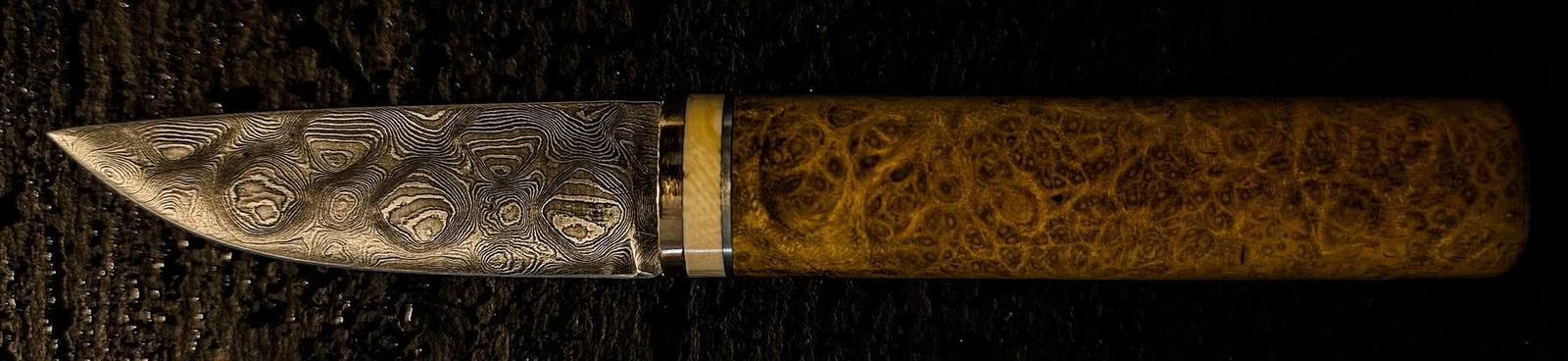
A straight-lined relative

Specifications

Steel
Bladeby Roland, mirror-polished
GrindScandi
ForgeGas
Working timeapprox. 3 hours
Heat treatment
QuenchOil, 60 °C
Hardness
64HRC
measured (Rockwell)
Dimensions
Overall length170 mm
Blade length63 mm
Blade height24 mm
Spine thickness2.3 mm
Weight54 g
Handle
WoodOlive wood from Italy, not stabilized
Ferrulelocal boxwood
End caplocal boxwood
ShapeWa handle, oval
TangHidden tang
Work
TypePuukko
Work no.19
CompletedOctober 2026

The smith

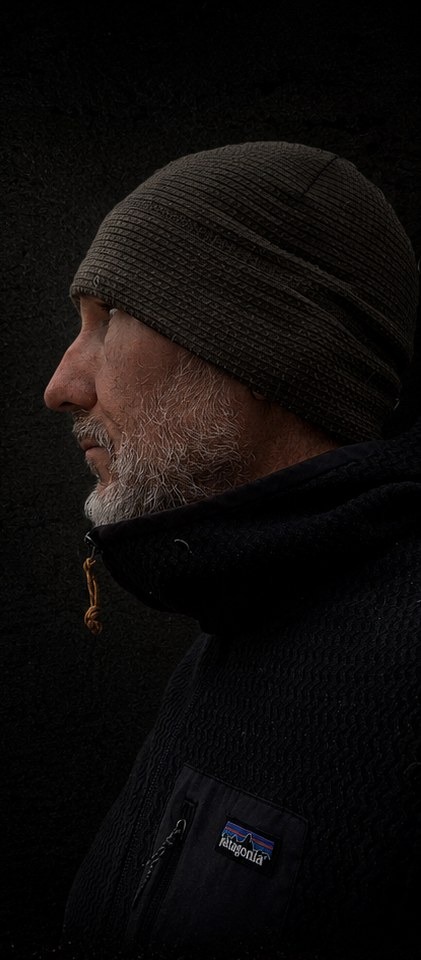
The smith behind DR BLADES

DR BLADES

DR are my initials and also stand for my academic degree. The pun was too good to just leave sitting around. As a drug hunter and researcher, I'm fascinated by how a small molecule has to be built so that it does exactly what it should at its biological target, and how, after a lot of optimization, it eventually becomes a drug. Structure determines function. One more or less atom, one bond that is twisted differently, and everything changes.

I find the very same thing at the forge. Here, too, shape and properties determine what a knife can do in the end. Hardly any material can be transformed like steel. The temperature control alone decides whether the same blade turns out soft, hard, too brittle or just right.

I bring many of my materials back from travels and outdoor activities. A rusty axe head found between the rocks on a Norwegian fjord, Aogami and Shirogami from Sakai in Japan, masur birch from Karelia, reindeer and moose antler from Lapland. Others come from our garden or from friends.

Each one carries a piece of history. It shouldn't disappear in the finished knife. The old iron is allowed to look old, the wood to show its wounds. That is exactly what each of my knives tells.

Care